

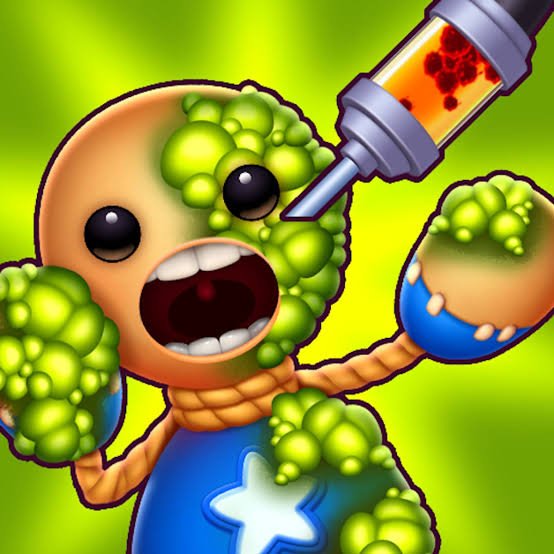
Kick The Buddy is a casual physics-based action game where you interact with a cartoon ragdoll character called Buddy inside a small sandbox-style room. Instead of traditional levels or races, the game revolves around experimenting with different interactions, earning in-game currency, unlocking more items, and watching Buddy react through animated movements and voice lines.
What stood out to me is how little explanation the basic loop needs. I initially expected missions or a normal stage structure, but the game is much more open-ended. Once I stopped looking for a clear finish line and treated it as a short-session sandbox, the design made much more sense.
| Game Detail | Information |
|---|---|
| Game | Kick The Buddy |
| Developer | Play gendary Limited |
| Genre | Casual / Action / Ragdoll |
| Gameplay Style | Physics-based sandbox interaction |
| Controls | Click, drag or tap |
| Main Character | Buddy |
| Modern Playgendary Release | November 2017 |
| Latest Verified Android Update | July 30, 2026 |
| Supported Mobile Devices | Android, iPhone and iPad |
| Windows Availability | Yes, through the current Google Play listing |
| Multiplayer | Single-player |
| Android Downloads | 500M+ |
Google Play currently categorizes Kick The Buddy as a single-player, stylized cartoon action game and lists more than 500 million Android downloads.
There Is No Traditional Finish Line
Kick The Buddy works differently from most action games.
There is no track to complete, opponent to defeat, or final level that ends the game.
Instead, the loop is based around interacting with Buddy, collecting currency, unlocking additional content, and experimenting with what the sandbox offers.
That makes the game easy to return to for a few minutes without remembering a complicated story or mission sequence.
The current official description presents it as a casual game designed around short, playful interactions rather than structured competition.
How Kick The Buddy Controls Work
The controls are built around direct pointer movement.
On touchscreen devices, most actions use taps, presses, and dragging gestures.
A mouse can provide the same basic kind of interaction where a browser or compatible desktop edition is available.
The control style works because Buddy reacts through ragdoll physics rather than requiring complicated button combinations.
For technical background, the MDN Pointer Events documentation explains how web interfaces can interpret mouse, touch, and other pointer input through a shared event model.
Buddy Is The Center Of The Game
Buddy is not simply a static target on screen.
The character moves, speaks, reacts, and changes position according to what happens inside the room.
That personality is important because otherwise the game could feel like a basic physics demonstration.
I found myself paying more attention to Buddy’s reactions than to the score itself. Small animations and responses make repeated interactions feel less identical.
The current App Store listing specifically describes Buddy as a ragdoll dummy and emphasizes his humorous reactions and customization.
Ragdoll Physics Keep Interactions Unpredictable
Kick The Buddy relies heavily on ragdoll-style physics.
Buddy’s arms, legs, and body can move independently as the character collides with the environment.
Because of that, performing the same basic interaction twice does not always create exactly the same animation.
That unpredictability is one reason the game remains entertaining despite having a relatively simple room layout.
Physics-based games often work well when the player can immediately understand cause and effect without reading lengthy instructions.
Coins And Unlockable Content
Interacting with Buddy can reward in-game currency.
That currency feeds into the broader progression system by opening additional items and customization options.
I originally spent currency whenever something new became available.
That made progression feel scattered.
A better approach inside the game is to look through the available categories first and decide which type of content actually interests you before spending everything immediately.
This is especially relevant because the current versions also contain in-app purchases and optional premium content. Both Google Play and Apple’s App Store identify Kick The Buddy as containing in-app purchases.
Customizing Buddy
Buddy’s appearance can also be changed.
The current version includes cosmetic customization that lets you give the character a different visual style.
This is separate from the main physics gameplay, but it gives players another reason to collect rewards.
I prefer treating customization as a secondary progression system rather than trying to unlock everything as quickly as possible.
Changing one or two visible details at a time also makes new cosmetics easier to notice.
Short Sessions Work Well
Kick The Buddy does not require a long uninterrupted session.
Because there is no traditional match timer or complicated campaign structure, it is easy to interact with the game briefly and return later.
That makes its structure quite different from games where leaving halfway through a level means losing progress.
For me, this is probably the strongest reason the game became so widely played on phones.
The game gives immediate interaction without requiring several minutes of setup first.
Who Created Kick The Buddy?
Kick The Buddy is currently developed and published by Playgendary Limited.
Google Play and Apple’s App Store both identify Playgendary Limited as the developer behind the modern version.
Playgendary also publishes games including:
- Tomb of the Mask
- Bowmasters
- Kick the Buddy: Second Kick
- Kick the Buddy: Forever
- Ultimate Bowmasters
Google Play’s official Playgendary developer catalogue confirms these titles under the same publisher.
Kick The Buddy Release History
The current Playgendary version of Kick The Buddy arrived in November 2017.
Historical app records place the iOS release in early November 2017, while the Android edition followed afterward.
The important point is that several older and newer Buddy-branded games exist, so their dates should not be mixed together.
The current Android game received another update on July 30, 2026, showing that Playgendary is still maintaining it.
Kick The Buddy And Second Kick Are Different
It is easy to confuse the original modern Kick The Buddy with Kick the Buddy: Second Kick.
Second Kick is a remastered release with its own app listing and update history.
Google Play currently shows Second Kick with more than 100 million downloads and an update dated July 22, 2026.
That date should not replace the July 30, 2026 update listed for the main Kick The Buddy app.
They are separate products.
Kick The Buddy Forever Is Another Separate Game
Kick the Buddy: Forever is also a separate sequel-style release.
It introduces its own visual presentation, content, and progression while keeping Buddy and the physics-based idea.
Google Play currently shows more than 50 million downloads for Forever and lists its latest update as July 3, 2026.
Keeping these editions separate helps avoid mixing ratings, updates, and features from three different games.
Mobile Device Support
The current official Kick The Buddy app supports modern Android hardware as well as Apple’s mobile devices.
Apple lists compatibility with:
- iPhone
- iPad
- Apple Vision devices running compatible software
The current iOS build requires iOS 13.0 or later.
Google Play also lists Android and Windows availability for the current version.
Single-Player Design
Kick The Buddy is primarily a single-player experience.
There is no requirement to compete directly against another person.
That makes sense because progress is based on your own interactions, currency, unlocked content, and customization rather than competitive matchmaking.
Google Play currently labels the game as single player.
Apple also lists Game Center features such as achievements and leaderboards, but those do not turn the central sandbox into real-time multiplayer.
Ads And In-App Purchases
One difference players should understand before choosing between versions is monetization.
The current mobile edition contains:
- advertising
- in-app purchases
- optional premium subscriptions
- purchasable in-game currency and content
Both major app stores disclose those systems clearly.
This matters if you are comparing Kick The Buddy with simpler browser games that may have fewer account-based purchases.
I would check what is included before assuming every item shown inside the game is obtainable through ordinary play.
Privacy Information
The official app stores also provide privacy disclosures.
Apple says Playgendary reports collecting or using categories including identifiers, usage information, and diagnostics, with some data potentially used for tracking or advertising.
Google Play provides its own Data Safety section for the Android version.
If privacy matters when choosing between mobile games, these official store disclosures are more useful than relying on an unofficial game description.
What Makes Kick The Buddy Different?
Kick The Buddy is unusual because there is very little traditional game structure.
Its main features include:
- a reactive ragdoll character
- direct touch interaction
- physics-based movement
- unlockable content
- in-game currency
- Buddy customization
- animated reactions
- short-session gameplay
- single-player progression
You are not learning a long control scheme or progressing through dozens of conventional stages.
Most of the entertainment comes from seeing how Buddy and the environment react.
Similar Games On Mopoga
Kick The Buddy fits naturally beside Mopoga games built around physics, ragdoll movement, and short casual sessions.
Ragdoll Hit is one of the closest matches because exaggerated physics also drive much of its gameplay.
Rowdy Wrestling uses ragdoll-style movement in a more competitive arena format, while Sausage Flip takes physics in a puzzle-platform direction.
I checked Mopoga’s two sitemap endpoints again, but the current reader returns an unsupported text/xml response rather than the underlying URLs.
For that reason, I have not invented internal product links.
The source-of-truth sitemaps remain:
https://imopoga.com/product-sitemap.xml
https://imopoga.com/product_cat-sitemap.xml
Once the individual canonical URLs can be read reliably, the strongest approach is to link Ragdoll Hit, Rowdy Wrestling, or another verified physics-related title naturally within the relevant paragraphs.
About Kick The Buddy
Kick The Buddy is best understood as a casual physics sandbox rather than a traditional action campaign.
Buddy reacts immediately, the controls are easy to understand, and progression mostly comes from collecting currency, opening more content, and customizing the experience.
For me, the game makes more sense when played in short sessions rather than approached as something that needs to be completed.
There is no conventional ending to chase.


Reviews
There are no reviews yet.