

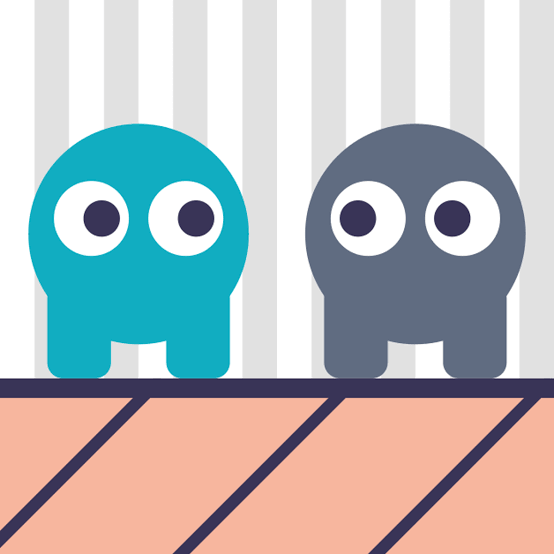
Time Clones is a puzzle-platform game by Robert Alvarez where solving a level means working with recordings of your own past movements. When you create a clone, the level rewinds and that clone repeats the actions you performed earlier. You then control a new version of the character while your older version follows its recorded path.
What made the game click for me was realizing that a clone is not another character you control freely. It is more like a recorded plan. If the first recording is badly timed, every later part of the puzzle can become harder. Planning the clone’s job before pressing C usually saves several restarts.
| Game Detail | Information |
|---|---|
| Game | Time Clones |
| Developer | Robert Alvarez |
| Genre | Puzzle, Platform |
| Gameplay Style | Time manipulation, recorded clones, switches, doors |
| Movement | WASD or Arrow Keys |
| Jump | Spacebar |
| Create Clone | C |
| Restart | R |
| Main Menu | Esc |
| Supported Devices | Desktop, Phone, Tablet |
| Release | August 2023 |
| Latest Verified Update | April 2024 |
| Levels | 24 |
| Current Rating | 3.9 |
| Current Votes | 116K+ |
| Multiplayer | Single-player |
The current Poki page identifies Robert Alvarez as the developer and confirms the controls, 24 levels, supported devices, August 2023 release, and April 2024 update.
How Time Clones Works
Every level contains a small platforming puzzle.
You may see:
- Buttons
- Doors
- Platforms
- Gaps
- Raised sections
- An exit
A single character cannot always operate everything at the right time.
That is where cloning becomes important.
You perform a sequence of movements.
Then you create a clone.
Time returns to the beginning, and the clone repeats those earlier movements while you control a fresh character.
The two versions can then work together.
One clone might hold a button.
Your current character can use the opened route.
A later clone can add another part to the sequence.
Poki describes the mechanic exactly this way, with past versions repeating your previous movements to operate buttons, reach platforms, and open doors.
Time Clones Controls
The desktop controls are:
- WASD: Move
- Arrow Keys: Alternative movement
- Spacebar: Jump
- C: Create a clone
- R: Restart the level
- Esc: Return to the main menu
These controls are confirmed by the current game listing.
There are more buttons than in some Robert Alvarez games, but each one has a clear purpose.
I found R particularly useful because puzzle mistakes are often obvious before the whole sequence finishes.
Restarting quickly is better than continuing with a clone you already know is badly positioned.
Your Clone Repeats What You Already Did
This is the most important rule.
A clone does not improvise.
It does not react to what your current character is doing.
It repeats your earlier movement sequence.
That means every action before cloning matters.
If you wait three seconds before walking to a button, the clone will also wait three seconds.
If you jump too early, the clone will repeat that early jump.
That turns movement into programming.
You are effectively creating a short recorded routine for another version of yourself.
Plan The Clone’s Job Before Creating It
Pressing C should usually come after you know what that clone needs to accomplish.
Ask:
What does this clone need to press?
Where should it finish?
How long should it wait?
Does another character need enough time to pass through a door?
Planning those questions first makes later timelines much easier to coordinate.
A clone with no clear purpose usually adds confusion instead of solving the puzzle.
Start With The Simplest Task
When several buttons appear, do not try to understand the whole level immediately.
Find the simplest requirement first.
For example:
A button opens one door.
That means the first clone may only need to stand on that button.
Record that action.
Then see what the newly opened route allows your current character to do.
Time Clones becomes easier when the puzzle is broken into small jobs.
Buttons Often Need A Past Version Of You
Many puzzles use buttons that only work while someone remains on them.
This creates the basic problem:
You need the button pressed.
But you also need your character somewhere else.
A clone solves that conflict.
Your past self can stay on the button while your current self moves through the opened path.
That simple idea becomes more complicated later when several switches must work in sequence.
Timing Matters As Much As Position
Standing in the correct place is not always enough.
You may need the clone to reach that position at the correct moment.
If a door opens too early or too late, your current character may not be where it needs to be.
I found it helpful to think about the level as a shared clock.
Every clone is replaying actions according to that same timeline.
Small delays can therefore become part of the solution.
Waiting Can Be A Useful Action
In most platform games, doing nothing feels pointless.
In Time Clones, waiting can be deliberate.
Suppose a later character needs several seconds to reach a door.
Your earlier clone may need to delay pressing the button until the right moment.
That means standing still can become part of the recorded sequence.
The important thing is that the wait is intentional.
Random hesitation makes timing harder to understand.
Use Short Clone Sequences When Possible
Long recordings are harder to debug.
If a clone runs, jumps, waits, presses two buttons, then crosses the whole level, many different things can go wrong.
A shorter recording is easier to understand.
Give one clone one clear job whenever the level allows it.
That makes later changes much easier.
If something fails, you know which part of the sequence caused the problem.
Restarting Is Part Of The Puzzle
R restarts the current level.
You will probably use it often.
That is not a sign that you are playing badly.
The clone system is built around testing a sequence, seeing what happens, then improving it.
I usually restart as soon as I notice one of these problems:
- Clone stops in the wrong place
- Button timing is clearly wrong
- A jump was missed
- A door closes before the next character arrives
- The sequence becomes impossible to continue
Fast resets keep the puzzle from becoming messy.
Do Not Fix A Bad First Clone With More Clones
This was one of the easiest traps to fall into.
If the first clone is badly timed, adding another clone may seem like a solution.
Usually it just creates a more complicated problem.
Instead, fix the earliest bad recording.
Later clones depend on earlier actions.
A clean first sequence makes everything after it easier.
Think Backward From The Exit
When a level looks confusing, start at the exit.
Ask:
What must be open for me to reach it?
Which button controls that?
Who needs to stand there?
How can that character get into position?
Working backward can reveal the order of clones more clearly than starting randomly from the beginning.
Use The Same Route Consistently
If a clone needs to cross a platform, try to use a repeatable route.
Small differences in movement can affect timing later.
A direct route is usually easier to coordinate than one with unnecessary jumps or pauses.
That does not mean every puzzle has one exact solution.
It means consistent movement makes your own solution easier to understand.
Watch The First Clone Before Planning The Second
After creating a clone, do not immediately rush forward.
Watch what it does.
Check whether:
- The timing is correct
- It reaches the intended switch
- It stops in the right place
- The door opens when expected
If the first recording already works, then plan the next layer.
If it does not, restart before making the puzzle more complicated.
Twenty-Four Levels
Time Clones contains 24 levels.
Speedrun.com independently lists all 24 stages, which confirms the level count outside the main host page.
The early levels introduce the time-clone idea in manageable situations.
Later stages require you to coordinate more complicated sequences.
That progression works well because the controls never really change.
What changes is how many actions you need to plan together.
Hints Are Available When You Get Stuck
Time Clones includes a hint system.
The current game description says you can watch a hint showing how a level is completed if you become stuck.
I would not use a hint immediately.
First, identify exactly where your solution stops working.
Try adjusting that part.
If you still cannot see the structure of the puzzle after several thoughtful attempts, the hint becomes much more useful because you can compare it against what you already tried.
Learn The Idea From A Hint, Not Only The Movements
If you do use a hint, do not only memorize:
left, jump, wait, clone.
Look for the reason behind the sequence.
Maybe the important idea is:
- Delay one clone
- Hold two switches at once
- Use a clone as a platform
- Open a door before the next timeline reaches it
Understanding that idea helps with later stages too.
Copying one exact solution only solves one level.
Platforming Is Part Of The Puzzle
Time Clones is not purely a logic board.
You still need to move and jump correctly.
However, the platforming usually supports the timing puzzle rather than replacing it.
A missed jump can ruin a clone recording because that mistake will also be replayed.
If a particular jump is important to the sequence, practise making it consistently before recording the final clone.
Mobile And Tablet Support
The current browser version supports:
- Desktop
- Phone
- Tablet
Poki confirms all three device categories.
Y8 also identifies Time Clones as an HTML5 mobile and touchscreen game.
The core puzzle remains the same across devices.
The main difference is how movement and cloning controls are presented.
Desktop Is The Clearest Fit For The Full Controls
The original control set is clearly designed around a keyboard.
You have movement keys plus separate commands for:
- Jump
- Clone
- Restart
- Menu
That makes desktop particularly comfortable when you need to create and restart sequences quickly.
Physical keys also make it easier to repeat the same movement timing several times.
Time Clones Was Released In 2023
Poki currently lists:
Release: August 2023
Latest update: April 2024.
An independent browser-game record published August 16, 2023 describes Time Clones as Robert Alvarez’s latest puzzle platformer at that time.
That supports August 2023 as the original browser release period rather than merely a later host date.
Who Created Time Clones?
Time Clones was created by Robert Alvarez.
Poki identifies him directly as the developer.
He has created many compact browser puzzle games built around one strong mechanic.
Other Robert Alvarez games include:
- Blockins
- One Button Bounce
- Ledge Throw
- Platform Countdown
- Hop Warp
- Plactions
- Jumping Clones
- Big Tall Small
- Teleport Jumper
- Block Toggle
- Isotiles
- Chessformer
- Resizer
- Grapple Grip
- Jumpossess
Poki’s current Robert Alvarez game pages repeatedly connect these titles to the same developer.
Time Clones And Jumping Clones
The names sound related, and both come from Robert Alvarez.
But the central mechanic is different.
Time Clones focuses on:
- Recording past movement
- Replaying timelines
- Coordinating several versions of yourself
- Timing buttons and doors
Jumping Clones uses clones differently and is built around another puzzle structure.
The shared theme is cooperation between multiple versions of a character.
Time Clones stands out because the clones are recordings of your own earlier actions.
Time Clones And Teleport Jumper
Teleport Jumper also comes from Robert Alvarez, but it solves movement problems using teleportation rather than recorded timelines.
Time Clones asks:
What should my past self be doing now?
Teleport Jumper asks more directly:
Where should I move next?
Both are compact puzzle-platform games, but they create very different planning problems.
Time Clones And Grapple Grip
Grapple Grip uses a grappling mechanic for reaching platforms and solving spatial puzzles.
Its current listing also identifies Robert Alvarez as the creator and directly names Time Clones among his other games.
Both games show a similar design approach.
One central mechanic is introduced early.
Then later stages keep finding new ways to use that mechanic.
Latest Verified Update
The current Poki listing gives:
Latest update: April 2024.
There is no reliable newer official update in the current sources.
For publishing, April 2024 is therefore the safest latest-update date.
Current Time Clones Rating
The current English listing shows approximately:
3.9 from more than 116,000 votes.
Regional versions show slightly different totals because the platform data changes over time.
The figure should be treated as a current platform snapshot rather than a permanent rating.
Is Time Clones Multiplayer?
No.
Time Clones is best described as a single-player puzzle platformer.
Although several characters can appear on screen, they are all recordings of the same player’s earlier actions.
You are not cooperating with another connected person.
The feeling of teamwork comes from coordinating with your own past versions.
Common Time Clones Mistakes
The first mistake is creating a clone without knowing what job it needs to perform.
The second is making recordings longer than necessary.
Another mistake is trying to repair a badly timed early clone by adding more clones.
Players can also forget that waiting is recorded just like movement.
Finally, do not treat every failure as a platforming problem.
Often the movement itself is correct and the timeline is wrong.
A Better Way To Solve Difficult Levels
I would use this process.
First, inspect the whole room.
Find the exit.
Identify every button and door.
Work backward from what needs to be open at the end.
Choose one job for the first clone.
Record the shortest clean route that completes that job.
Watch the replay.
Only when it works should you create the next layer.
If something goes wrong, fix the earliest incorrect recording rather than adding complexity.
That turns a confusing level into a sequence of smaller problems.
Related Categories
Time Clones fits naturally into:
- Puzzle Games
- Platform Games
- Brain Games
- Logic Games
- Time Games
- HTML5 Games
- Single-Player Games
- Mobile Games
Poki currently places it under Platform Games and also associates it with brain, puzzle, logic, and difficult-game categories.
What Makes Time Clones Different?
Time Clones takes a very ordinary platform-game action, walking through a room, and turns it into something you can reuse.
Your first journey becomes your second character.
Your second journey can become another clone.
Soon, the solution is not about controlling one character well.
It is about creating several past versions whose actions fit together on the same timeline.
For me, that is the strongest part of the game. You are not commanding a team. You are building the team by recording yourself.



Reviews
There are no reviews yet.