
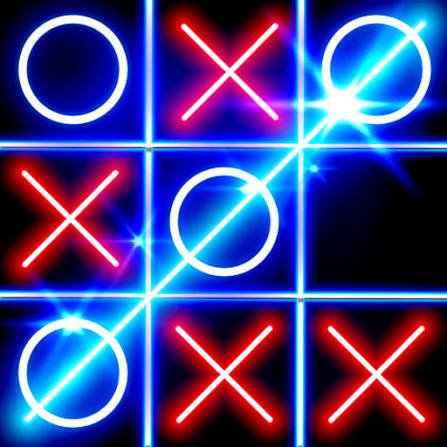
TicTacToe is a classic board game from Playtouch where two players take turns placing X and O marks on a 3×3 grid. The goal is to create a horizontal, vertical, or diagonal line of three marks before your opponent does. You can play against the computer or share the same device with another player.
The rules are simple enough to understand in seconds, but careless moves are punished quickly. What changed the game for me was stopping after every opponent move and checking two things before placing my own mark: whether I could win immediately and whether they could win on their next turn.
| Game Detail | Information |
|---|---|
| Game | TicTacToe |
| Developer | Playtouch |
| Genre | Board, Puzzle |
| Gameplay Style | Turn-based 3×3 strategy |
| Controls | Mouse click or touchscreen tap |
| Supported Devices | Desktop, Phone, Tablet |
| Poki Release | July 2019 |
| Latest Verified Poki Update | June 2022 |
| Current Poki Rating | 4.4 |
| Current Poki Votes | 1.49M+ |
| Modes | Single-player, local two-player |
| Multiplayer | Local multiplayer |
The current Playtouch version on Poki lists July 2019 as its release, June 2022 as the latest platform update, and support for desktop, phone, and tablet browsers.
One Small Grid Creates Most Of The Strategy
TicTacToe uses nine spaces arranged in three rows and three columns.
One player uses X.
The other uses O.
Players alternate turns and place one mark in an empty square.
You win by completing a line of three matching symbols:
- Across a row
- Down a column
- Along either diagonal
If all nine spaces are filled without either player making a line, the round ends in a draw.
There are no movement controls, timers, upgrades, or complicated rules to learn.
Almost all of the challenge comes from deciding which empty square matters most.
How To Play TicTacToe
A useful turn order is:
- Check whether you can complete three marks.
- Check whether your opponent is one move away from winning.
- Block them if necessary.
- If neither player has an immediate win, choose a position that creates stronger future options.
This is much more reliable than simply placing a mark wherever there is open space.
I used to concentrate entirely on building my own line. That works against inexperienced opponents, but it becomes unreliable as soon as the other player starts creating threats of their own.
Controls
TicTacToe has one of the simplest control systems of any browser game.
Desktop
Use the left mouse button to choose an empty square.
Phone And Tablet
Tap an empty square on the screen.
Poki confirms both mouse and touch interaction for the current Playtouch version.
Mozilla’s Pointer Events documentation provides useful technical background on how modern websites can handle mouse and touchscreen input through the same browser system.
The Centre Square Is Usually Valuable
The centre connects to more possible winning lines than any corner or edge.
From the middle, a mark can contribute to:
- The horizontal middle row
- The vertical middle column
- One diagonal
- The other diagonal
That does not mean the centre automatically wins the round.
It simply gives you several possible directions to develop.
If my opponent leaves the middle open early, I normally consider it before choosing an edge square.
Corners Create Different Opportunities
Corners are also useful because each corner belongs to three possible winning lines.
An edge square belongs to only two.
That difference is easy to overlook when learning the game.
For example, placing a mark in the top-left corner can contribute to:
- The top row
- The left column
- The main diagonal
This is why random edge moves often create fewer future options.
Block Before Building A New Line
One of the easiest mistakes is becoming too focused on your own plan.
Suppose you already have two possible ways to develop a line.
That sounds promising.
But if the other player already has two marks together with an empty third space, none of your future plans matter unless you block that square immediately.
My simple priority is:
Win now → block now → build next.
That rule catches many avoidable losses.
Two Threats At Once Are Much Harder To Stop
A strong position can create two possible winning squares on the next turn.
Your opponent can normally block only one.
This is often called creating a fork.
You do not need to memorise every possible fork before playing.
Start by noticing whether one move would give your symbol two different ways to complete three in a row.
Learning to recognise that pattern makes the game much more interesting than simply chasing one line at a time.
Wolfram MathWorld’s Tic-Tac-Toe entry provides useful mathematical background on the game and its finite set of possible positions.
Playing Against The Computer
The Playtouch version includes a single-player option where the device controls the other side.
This is useful for learning the board because you can concentrate entirely on your own decisions.
When playing the computer, I would practise three habits:
- Check every line before moving.
- Avoid unnecessary edge moves early.
- Look for what your opponent’s last move changed.
That final habit is especially useful.
Instead of scanning the whole board from scratch every turn, ask why the opponent selected that particular square.
Often it reveals the line they are trying to create.
Local Two-Player Mode
TicTacToe also supports human-versus-human play on the same device.
Players simply alternate turns.
There is no need for separate controls because only one person acts at a time.
This makes the game particularly easy to share on:
- A desktop computer
- A phone
- A tablet
It should be described as local multiplayer, not remote online matchmaking.
For another Mopoga game designed around two people sharing one device, Fortz gives both players separate keyboard controls and turns the competition into a much more active fort battle.
Do Not Automatically Start On An Edge
An edge opening is legal, but it usually gives you fewer possible lines than a centre or corner.
I made this mistake often because an edge square can look like a natural starting point.
Before using one, I now check whether the centre or a useful corner is available.
That does not mean edge squares are bad.
They become important for:
- Blocking
- Completing rows
- Completing columns
- Preventing forks
The problem is using them without a reason.
Draws Are A Normal Result
As players become better, drawn rounds become much more common.
That is not necessarily a sign that nothing happened.
A draw can mean both players noticed every immediate threat and prevented the other side from completing a line.
Because the board is so small, experienced players quickly begin recognising common patterns.
This is one reason TicTacToe works well as a short logic exercise despite its extremely simple rules.
Think One Move Beyond The Obvious Block
Suppose your opponent is threatening to win.
You block them.
That is correct, but your turn does not have to be purely defensive.
Sometimes the blocking square also helps build one of your own lines.
I started improving once I looked for defensive moves that also created pressure.
The question became:
Can I stop their line and improve my own position with the same square?
When the answer is yes, the board can change very quickly.
The Game Is Fully Solved
Tic-tac-toe is a mathematically solved game.
With perfect play from both sides, neither player needs to lose.
That does not make ordinary matches pointless.
Most people do not calculate every possible future position during a casual round, so mistakes, forks, missed blocks, and unusual choices still create plenty of variation.
The mathematical side is useful mainly because it explains why strong players produce so many draws.
For readers interested in the wider mathematical treatment of simple strategy games, the American Mathematical Society publishes educational resources covering combinatorics, game theory, and related mathematical topics.
Playtouch Has More Than One Tic Tac Toe Version
Playtouch has published several Tic Tac Toe-style games over the years.
Its current game catalogue includes:
- Classic Tic Tac Toe
- Tic Tac Toe: The Original Game
- Tic Tac Toe: Colors Game
- Tic Tac Toe Deluxe
The official Playtouch HTML5 catalogue lists these titles among the developer’s browser games.
This is why identifying the correct browser listing matters.
The Mopoga page here is based on the Playtouch TicTacToe version released on Poki in July 2019, not the separate Code This Lab or InfinityGames.io editions.
Who Created TicTacToe?
This version of TicTacToe was created by Playtouch.
Playtouch develops HTML5 browser games across puzzle, arcade, action, sports, and casual categories.
Its first-party catalogue confirms that it produces its Tic Tac Toe titles internally and distributes them for browser and mobile environments.
One official Playtouch Tic Tac Toe product page also confirms HTML5/WebGL rendering and both mouse and touch support for its classic implementation.
Browser Technology And Device Support
The current Poki version supports:
- Desktop
- Phone
- Tablet
That broad support fits the control system because the game needs only a pointer or touch input.
There are no keyboard combinations that make mobile play awkward.
The board also suits smaller screens because all important information fits inside a single 3×3 grid.
For this particular type of game, I do not see a major gameplay advantage between mouse and touch.
Both provide exactly the input the board needs.
TicTacToe Compared With Fortz
Both can be played with another person locally, but almost everything else is different.
TicTacToe is turn-based.
Only one player acts at a time.
Mopoga’s Fortz has both people playing simultaneously with separate keyboard controls, turrets, ammunition, defensive blocks, and custom levels.
TicTacToe is therefore the easier choice when you want a short strategy round without learning controls.
Fortz asks for faster reactions and more active coordination.
TicTacToe Compared With Basketball Stars
Mopoga’s Basketball Stars also supports local two-player matches, but it is built around movement, timing, shooting, blocking, and stealing rather than turn-based board strategy.
TicTacToe gives both players as much thinking time as they want between turns.
Basketball Stars creates much more immediate pressure because both players can move and react during the match.
That makes them useful alternatives for two very different kinds of local competition.
Three Mistakes I Would Avoid
Ignoring A Direct Threat
Always check whether the opponent already has two marks in a line.
Using Edge Squares Without A Reason
Centre and corner positions usually create more possible lines early in the game.
Looking Only At Your Own Marks
The opponent’s shape on the board matters just as much as yours.
I would rather spend an extra second checking all eight possible winning lines than lose because I missed an obvious diagonal.
Current TicTacToe Rating
The current Poki listing shows approximately 4.4 out of 5, based on roughly 1.5 million votes.
That makes it one of the more heavily rated simple board games on the platform.
The vote total continues to change, so it should be treated as a current platform snapshot rather than a permanent number.
Ratings from the separate Code This Lab and InfinityGames Tic Tac Toe releases should not be combined with this one because they are different games from different developers.
Release And Latest Update
For this specific Playtouch version, the strongest current dates are:
- Poki release: July 2019
- Latest Poki update: June 2022
Playtouch produced Tic Tac Toe games before 2019. Its official Classic Tic Tac Toe technical page, for example, records an original release date of August 4, 2016 for that separate title.
That is why the table uses Poki Release rather than claiming July 2019 was the first Tic Tac Toe game Playtouch ever published.
Related Categories
TicTacToe fits naturally into:
- Board Games
- Puzzle Games
- Brain Games
- Two-Player Games
- Local Multiplayer Games
- Classic Games
- Strategy Games
- Mobile Games
The current browser listing categorises it primarily as a board game and places it among two-player titles.
What Makes TicTacToe Last?
TicTacToe has almost no setup.
There are nine spaces, two symbols, and one clear objective.
Yet every mark changes several possible lines at once.
That creates a useful balance between accessibility and strategy.
A new player can understand the rules immediately.
A more experienced player starts thinking about centre control, corners, forks, blocks, and future threats.
For me, the biggest improvement came from checking the opponent’s position before planning my own move. Once I stopped treating the board as nine independent squares and started thinking about overlapping lines, careless losses became much less common.
Short Description
TicTacToe
TicTacToe is a classic board game from Playtouch where two players take turns placing X and O marks on a 3×3 grid. The goal is to create a horizontal, vertical, or diagonal line of three marks before your opponent does. You can play against the computer or share the same device with another player.
The rules are simple enough to understand in seconds, but careless moves are punished quickly. What changed the game for me was stopping after every opponent move and checking two things before placing my own mark: whether I could win immediately and whether they could win on their next turn.
| Game Detail | Information |
|---|---|
| Game | TicTacToe |
| Developer | Playtouch |
| Genre | Board, Puzzle |
| Gameplay Style | Turn-based 3×3 strategy |
| Controls | Mouse click or touchscreen tap |
| Supported Devices | Desktop, Phone, Tablet |
| Poki Release | July 2019 |
| Latest Verified Poki Update | June 2022 |
| Current Poki Rating | 4.4 |
| Current Poki Votes | 1.49M+ |
| Modes | Single-player, local two-player |
| Multiplayer | Local multiplayer |
The current Playtouch version on Poki lists July 2019 as its release, June 2022 as the latest platform update, and support for desktop, phone, and tablet browsers.
One Small Grid Creates Most Of The Strategy
TicTacToe uses nine spaces arranged in three rows and three columns.
One player uses X.
The other uses O.
Players alternate turns and place one mark in an empty square.
You win by completing a line of three matching symbols:
- Across a row
- Down a column
- Along either diagonal
If all nine spaces are filled without either player making a line, the round ends in a draw.
There are no movement controls, timers, upgrades, or complicated rules to learn.
Almost all of the challenge comes from deciding which empty square matters most.
How To Play TicTacToe
A useful turn order is:
- Check whether you can complete three marks.
- Check whether your opponent is one move away from winning.
- Block them if necessary.
- If neither player has an immediate win, choose a position that creates stronger future options.
This is much more reliable than simply placing a mark wherever there is open space.
I used to concentrate entirely on building my own line. That works against inexperienced opponents, but it becomes unreliable as soon as the other player starts creating threats of their own.
Controls
TicTacToe has one of the simplest control systems of any browser game.
Desktop
Use the left mouse button to choose an empty square.
Phone And Tablet
Tap an empty square on the screen.
Poki confirms both mouse and touch interaction for the current Playtouch version.
Mozilla’s Pointer Events documentation provides useful technical background on how modern websites can handle mouse and touchscreen input through the same browser system.
The Centre Square Is Usually Valuable
The centre connects to more possible winning lines than any corner or edge.
From the middle, a mark can contribute to:
- The horizontal middle row
- The vertical middle column
- One diagonal
- The other diagonal
That does not mean the centre automatically wins the round.
It simply gives you several possible directions to develop.
If my opponent leaves the middle open early, I normally consider it before choosing an edge square.
Corners Create Different Opportunities
Corners are also useful because each corner belongs to three possible winning lines.
An edge square belongs to only two.
That difference is easy to overlook when learning the game.
For example, placing a mark in the top-left corner can contribute to:
- The top row
- The left column
- The main diagonal
This is why random edge moves often create fewer future options.
Block Before Building A New Line
One of the easiest mistakes is becoming too focused on your own plan.
Suppose you already have two possible ways to develop a line.
That sounds promising.
But if the other player already has two marks together with an empty third space, none of your future plans matter unless you block that square immediately.
My simple priority is:
Win now → block now → build next.
That rule catches many avoidable losses.
Two Threats At Once Are Much Harder To Stop
A strong position can create two possible winning squares on the next turn.
Your opponent can normally block only one.
This is often called creating a fork.
You do not need to memorise every possible fork before playing.
Start by noticing whether one move would give your symbol two different ways to complete three in a row.
Learning to recognise that pattern makes the game much more interesting than simply chasing one line at a time.
Wolfram MathWorld’s Tic-Tac-Toe entry provides useful mathematical background on the game and its finite set of possible positions.
Playing Against The Computer
The Playtouch version includes a single-player option where the device controls the other side.
This is useful for learning the board because you can concentrate entirely on your own decisions.
When playing the computer, I would practise three habits:
- Check every line before moving.
- Avoid unnecessary edge moves early.
- Look for what your opponent’s last move changed.
That final habit is especially useful.
Instead of scanning the whole board from scratch every turn, ask why the opponent selected that particular square.
Often it reveals the line they are trying to create.
Local Two-Player Mode
TicTacToe also supports human-versus-human play on the same device.
Players simply alternate turns.
There is no need for separate controls because only one person acts at a time.
This makes the game particularly easy to share on:
- A desktop computer
- A phone
- A tablet
It should be described as local multiplayer, not remote online matchmaking.
For another Mopoga game designed around two people sharing one device, Fortz gives both players separate keyboard controls and turns the competition into a much more active fort battle.
Do Not Automatically Start On An Edge
An edge opening is legal, but it usually gives you fewer possible lines than a centre or corner.
I made this mistake often because an edge square can look like a natural starting point.
Before using one, I now check whether the centre or a useful corner is available.
That does not mean edge squares are bad.
They become important for:
- Blocking
- Completing rows
- Completing columns
- Preventing forks
The problem is using them without a reason.
Draws Are A Normal Result
As players become better, drawn rounds become much more common.
That is not necessarily a sign that nothing happened.
A draw can mean both players noticed every immediate threat and prevented the other side from completing a line.
Because the board is so small, experienced players quickly begin recognising common patterns.
This is one reason TicTacToe works well as a short logic exercise despite its extremely simple rules.
Think One Move Beyond The Obvious Block
Suppose your opponent is threatening to win.
You block them.
That is correct, but your turn does not have to be purely defensive.
Sometimes the blocking square also helps build one of your own lines.
I started improving once I looked for defensive moves that also created pressure.
The question became:
Can I stop their line and improve my own position with the same square?
When the answer is yes, the board can change very quickly.
The Game Is Fully Solved
Tic-tac-toe is a mathematically solved game.
With perfect play from both sides, neither player needs to lose.
That does not make ordinary matches pointless.
Most people do not calculate every possible future position during a casual round, so mistakes, forks, missed blocks, and unusual choices still create plenty of variation.
The mathematical side is useful mainly because it explains why strong players produce so many draws.
For readers interested in the wider mathematical treatment of simple strategy games, the American Mathematical Society publishes educational resources covering combinatorics, game theory, and related mathematical topics.
Playtouch Has More Than One Tic Tac Toe Version
Playtouch has published several Tic Tac Toe-style games over the years.
Its current game catalogue includes:
- Classic Tic Tac Toe
- Tic Tac Toe: The Original Game
- Tic Tac Toe: Colors Game
- Tic Tac Toe Deluxe
The official Playtouch HTML5 catalogue lists these titles among the developer’s browser games.
This is why identifying the correct browser listing matters.
The Mopoga page here is based on the Playtouch TicTacToe version released on Poki in July 2019, not the separate Code This Lab or InfinityGames.io editions.
Who Created TicTacToe?
This version of TicTacToe was created by Playtouch.
Playtouch develops HTML5 browser games across puzzle, arcade, action, sports, and casual categories.
Its first-party catalogue confirms that it produces its Tic Tac Toe titles internally and distributes them for browser and mobile environments.
One official Playtouch Tic Tac Toe product page also confirms HTML5/WebGL rendering and both mouse and touch support for its classic implementation.
Browser Technology And Device Support
The current Poki version supports:
- Desktop
- Phone
- Tablet
That broad support fits the control system because the game needs only a pointer or touch input.
There are no keyboard combinations that make mobile play awkward.
The board also suits smaller screens because all important information fits inside a single 3×3 grid.
For this particular type of game, I do not see a major gameplay advantage between mouse and touch.
Both provide exactly the input the board needs.
TicTacToe Compared With Fortz
Both can be played with another person locally, but almost everything else is different.
TicTacToe is turn-based.
Only one player acts at a time.
Mopoga’s Fortz has both people playing simultaneously with separate keyboard controls, turrets, ammunition, defensive blocks, and custom levels.
TicTacToe is therefore the easier choice when you want a short strategy round without learning controls.
Fortz asks for faster reactions and more active coordination.
TicTacToe Compared With Basketball Stars
Mopoga’s Basketball Stars also supports local two-player matches, but it is built around movement, timing, shooting, blocking, and stealing rather than turn-based board strategy.
TicTacToe gives both players as much thinking time as they want between turns.
Basketball Stars creates much more immediate pressure because both players can move and react during the match.
That makes them useful alternatives for two very different kinds of local competition.
Three Mistakes I Would Avoid
Ignoring A Direct Threat
Always check whether the opponent already has two marks in a line.
Using Edge Squares Without A Reason
Centre and corner positions usually create more possible lines early in the game.
Looking Only At Your Own Marks
The opponent’s shape on the board matters just as much as yours.
I would rather spend an extra second checking all eight possible winning lines than lose because I missed an obvious diagonal.
Current TicTacToe Rating
The current Poki listing shows approximately 4.4 out of 5, based on roughly 1.5 million votes.
That makes it one of the more heavily rated simple board games on the platform.
The vote total continues to change, so it should be treated as a current platform snapshot rather than a permanent number.
Ratings from the separate Code This Lab and InfinityGames Tic Tac Toe releases should not be combined with this one because they are different games from different developers.
Release And Latest Update
For this specific Playtouch version, the strongest current dates are:
- Poki release: July 2019
- Latest Poki update: June 2022
Playtouch produced Tic Tac Toe games before 2019. Its official Classic Tic Tac Toe technical page, for example, records an original release date of August 4, 2016 for that separate title.
That is why the table uses Poki Release rather than claiming July 2019 was the first Tic Tac Toe game Playtouch ever published.
Related Categories
TicTacToe fits naturally into:
- Board Games
- Puzzle Games
- Brain Games
- Two-Player Games
- Local Multiplayer Games
- Classic Games
- Strategy Games
- Mobile Games
The current browser listing categorises it primarily as a board game and places it among two-player titles.
What Makes TicTacToe Last?
TicTacToe has almost no setup.
There are nine spaces, two symbols, and one clear objective.
Yet every mark changes several possible lines at once.
That creates a useful balance between accessibility and strategy.
A new player can understand the rules immediately.
A more experienced player starts thinking about centre control, corners, forks, blocks, and future threats.
For me, the biggest improvement came from checking the opponent’s position before planning my own move. Once I stopped treating the board as nine independent squares and started thinking about overlapping lines, careless losses became much less common.


Reviews
There are no reviews yet.