

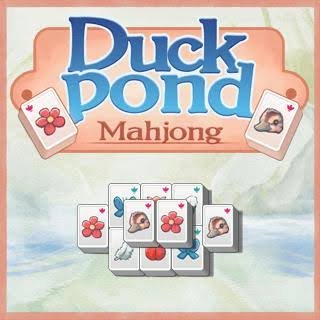
Duck Pond Mahjong is a relaxed single-player tile-matching puzzle where you clear layered boards by finding two matching free tiles. Instead of traditional mahjong characters and symbols alone, the game uses a playful pond theme with ducks, flowers, eggs, acorns, and other illustrated tiles.
The controls are simple, but the order in which you remove pairs matters more than it first appears. My biggest early mistake was clicking the first match I noticed. That can leave important tiles trapped underneath. Looking at which pair will uncover the most useful tiles usually gives you a better chance of clearing the whole board.
| Game Detail | Information |
|---|---|
| Game | Duck Pond Mahjong |
| Developer | Coolgames B.V. |
| Genre | Board, Mahjong Solitaire |
| Gameplay Style | Tile matching, layered puzzle clearing |
| Controls | Mouse click or touchscreen tap |
| Supported Devices | Desktop, Phone, Tablet |
| Earlier Browser Availability | Before current Poki release |
| Poki Release | October 26, 2019 |
| Latest Verified Poki Update | November 25, 2020 |
| Current Rating | 4.0 |
| Current Votes | 11K+ |
| Main Layouts | 24 |
| Multiplayer | Single-player |
The current Poki listing identifies Coolgames B.V. as the developer, classifies the game under board and mahjong games, and confirms desktop, phone, and tablet support.
How Duck Pond Mahjong Works
The goal is to remove every tile from the board.
You do that by selecting matching pairs.
However, you cannot simply click any two matching pictures you can see.
A tile must be free before it can be selected.
In practical terms, that means it cannot have another tile covering it from above, and at least one of its long sides must be open.
That rule is what gives the puzzle its strategy.
Two matching ducks may be visible, but one might still be locked inside the layout.
Duck Pond Mahjong Controls
The controls are minimal:
- Desktop: Click a free tile, then click its matching partner
- Phone: Tap one tile, then tap its match
- Tablet: Tap matching free tiles
The current browser listing supports desktop, phone, and tablet.
Modern browsers can handle mouse and touchscreen actions through the W3C Pointer Events standard, which defines a common input model for devices such as mice, touchscreens, and pens.
There is no keyboard movement to learn.
Almost all of the challenge comes from reading the board correctly.
What Counts As A Free Tile
This is the rule that matters most.
A tile is playable when:
- Nothing is stacked on top of it
- At least one of its left or right sides is open
A tile sitting in the middle of a row may be completely visible but still unavailable because another tile touches both sides.
Likewise, a tile can have one side blocked and still be playable if the other side is clear.
Once this rule becomes familiar, the board becomes much easier to read.
Match The Pictures, Not Just The Position
Duck Pond Mahjong uses themed pictures instead of relying only on traditional-looking mahjong symbols.
The game includes images such as:
- Ducks
- Flowers
- Eggs
- Acorns
- Numbers
- Decorative symbols
The current Mahjong.com description confirms that the goal is to combine matching tiles in pairs, while older game records describe the same duck-and-pond visual theme.
Do not assume two tiles match just because they have similar colors.
Look at the actual symbol or picture.
There Are 24 Main Board Formations
Duck Pond Mahjong includes 24 different main formations.
That matters because the same matching rule can feel very different depending on how the tiles are stacked.
A wide layout may give you many free side tiles.
A taller layout can keep more useful pieces buried underneath other layers.
Older game records specifically describe 24 puzzle layouts, while current platform information continues to identify Duck Pond Mahjong as a layered matching game.
I would not try to solve every formation using exactly the same removal pattern.
The shape of the board should influence which pair you choose first.
Remove Tiles That Open The Board
When two or more pairs are available, I usually prefer the move that frees additional tiles.
For example, imagine two possible matches:
One pair sits on the outside edge and reveals nothing.
Another pair is blocking two tiles underneath.
Removing the second pair gives you more choices.
That does not guarantee it is always the perfect move, but it generally keeps the board more flexible.
The game becomes much easier once you stop thinking only about the current pair and start thinking about what becomes playable afterward.
Do Not Clear Easy Pairs Automatically
Easy matches are tempting.
Two ducks appear right beside each other.
You see them instantly.
You click them.
The problem is that another matching pair elsewhere may be blocking more important tiles.
I found it useful to pause when several matches are visible.
Ask:
Which pair exposes the most?
Which pair is sitting on top of another layer?
Which pair might become difficult to reach later?
That short pause often prevents a board from becoming unnecessarily restricted.
Look At Higher Layers First
Tiles sitting on top of the board usually block pieces underneath them.
That makes upper layers especially important.
Removing a high tile can sometimes reveal several new options at once.
By contrast, clearing an outside tile from the lowest layer may change very little.
When I am unsure between two legal pairs, I often prefer the one that reduces the height of the layout.
It gives the board more room to open.
Side Tiles Matter Too
Top layers are important, but the outside edges matter just as much.
A tile surrounded on both the left and right cannot be selected.
Removing tiles from the sides gradually frees those blocked pieces.
This creates two useful goals at the same time:
reduce the upper layers and open the sides.
Good moves often help with one of those two things.
Great moves sometimes help with both.
Plan Two Moves Ahead
You do not need to solve the entire board mentally.
That would make a casual puzzle feel unnecessarily complicated.
I found it more practical to look only one or two moves ahead.
Before taking a pair, check whether the newly exposed tiles create another match.
For example:
Remove ducks.
That exposes two flowers.
The flowers can then be removed.
That reveals another pair.
A short chain like that is usually more useful than an isolated match that leaves the board unchanged.
The Timer Adds Light Pressure
Some versions of Duck Pond Mahjong use a timer for each layout.
Older records describe a three-minute limit for individual boards.
That can make new players click too quickly.
I would still prioritize correct pair selection.
A fast wrong move can create a board with fewer options, costing more time later.
The better goal is to make decisions quickly once you understand what the board is showing you.
Speed should come after recognition.
Recognize Repeated Tile Designs
The more you play, the faster certain pictures become recognizable.
At first, you may scan every tile individually.
After a few boards, ducks, flowers, eggs, and acorns start standing out immediately.
This reduces the time spent searching for basic matches.
That extra attention can then go toward deciding which match is strategically better.
The skill is not just seeing pairs faster.
It is seeing useful pairs faster.
Do Not Confuse This With Four-Player Mahjong
Duck Pond Mahjong is a mahjong solitaire puzzle.
It is not the traditional four-player mahjong game.
There are no hands, turn-taking systems, or opponents.
You are simply clearing a layered tile layout by removing matching free pairs.
This distinction matters because the shared tile style can make the names sound more similar than the gameplay actually is.
Duck Pond Mahjong is best understood as a single-player matching puzzle.
Mouse Play On Desktop
Desktop play uses the mouse.
This works well because you can move the pointer over the whole board without covering the tiles with your hand.
I find desktop especially comfortable on layouts where several similar pictures are close together.
The cursor gives you a precise way to select one tile at a time.
There is no need for keyboard controls.
Touchscreen Play On Phone And Tablet
The current browser version also supports phones and tablets.
Touch input fits this type of puzzle naturally.
Tap one free tile.
Then tap its partner.
On a smaller screen, I would slow down slightly when several similar tiles sit close together.
An incorrect tap can break your concentration even if it does not permanently damage the board.
Current Developer Information
The current Poki listing credits Coolgames B.V. as the developer.
Older archived platform data sometimes lists Tingly Games for the same title, which suggests the game has moved between publishing or ownership records over time.
For a current game page, the safest attribution is:
Developer: Coolgames B.V.
That follows the active platform record rather than relying on older metadata.
Release Date Explained
There are multiple dates associated with Duck Pond Mahjong.
Older game directories show the title available years before its current Poki release. One record lists a December 2014 publication, while Coolmath Games records a September 7, 2016 release for its hosted version.
The current Poki listing gives:
Poki release: October 26, 2019
Latest Poki update: November 25, 2020
So the safest summary is:
Earlier browser availability: before 2019
Current major platform release: October 26, 2019
Latest listed platform update: November 25, 2020
That avoids incorrectly presenting 2019 as the game’s first-ever appearance.
Current Duck Pond Mahjong Rating
The current Poki listing shows approximately:
4.0 from more than 11,000 votes.
Ratings can change as additional players vote.
It is better to treat that figure as a current platform snapshot rather than a permanent game statistic.
Is Duck Pond Mahjong Multiplayer?
Duck Pond Mahjong is a single-player puzzle game.
There is no need to wait for matchmaking or another player.
You clear the board at your own pace while trying to make efficient tile-removal decisions.
That makes it suitable for short sessions because a new puzzle can be started immediately.
Common Duck Pond Mahjong Mistakes
The first mistake is selecting the first visible pair.
The second is forgetting that a visible tile can still be blocked.
Another mistake is clearing too many outside tiles while leaving important upper layers untouched.
Players can also spend too long looking for identical pictures without checking whether those tiles are actually free.
The final mistake is rushing because of the timer.
Fast decisions only help when they keep the board open.
A Better Way To Clear Boards
I would use this simple process:
First, scan the top layer.
Next, check the outer left and right edges.
Then identify every available matching pair.
If several options exist, choose the one that exposes the most new tiles.
After each removal, scan the board again.
Do not assume the next move should be the pair you noticed earlier.
The board changes after every match.
That is where most of the strategy comes from.
Related Categories
Duck Pond Mahjong fits naturally into:
- Mahjong Games
- Board Games
- Matching Games
- Puzzle Games
- Brain Games
- Tile Games
- Single-Player Games
Its current main platform classification is Board Games, with Mahjong as its more specific game type.
What Makes Duck Pond Mahjong Different?
Duck Pond Mahjong uses a familiar mahjong-solitaire rule set but gives it a softer pond-themed presentation.
Instead of concentrating only on traditional tile artwork, you are matching ducks, flowers, eggs, acorns, and similar pictures across 24 different layouts.
The controls never become complicated.
The challenge comes from choosing the order.
A pair may be legal without being useful.
Once you start asking what each removal will uncover, the game becomes much more interesting than simply spotting two identical pictures.




Reviews
There are no reviews yet.