

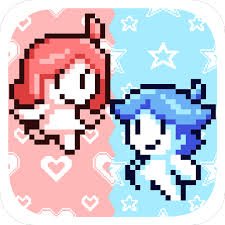
Heart Star is a puzzle-platform game from Adventure Islands where you control two friends living in parallel versions of the same level. You switch between them, move blocks linked to their respective colors, avoid hazards, and guide both characters onto their own golden target spaces.
The first thing I got wrong was trying to finish one character’s route before thinking about the other. Heart Star works better when you treat both characters as parts of the same puzzle. One character may need to move first so the other can reach a platform, clear an obstacle, or stand in the right position.
| Game Detail | Information |
|---|---|
| Game | Heart Star |
| Developer | Adventure Islands |
| Genre | Puzzle / Platform |
| Gameplay Style | Character switching, parallel worlds, platform puzzles |
| Main Objective | Move both friends to their golden target zones |
| Controls | WASD or Arrow Keys, C, X |
| Supported Devices | Desktop, Phone, Tablet |
| Standalone Release | March 6, 2020 |
| Browser Release | June 2021 |
| Latest Verified Browser Update | January 2022 |
| Levels | 60 in the standalone version |
| Current Browser Rating | About 4.2 |
| Current Browser Votes | 343K+ |
| Multiplayer | Single-player |
Two Characters Share One Puzzle
Heart Star gives you two characters, but you do not control both at the same time.
Instead, you switch between them.
Each character exists in a different version of the level, and some objects respond differently depending on which character is active.
That creates the main loop:
inspect both sides → move one character → switch → move the other → clear the route → reach both targets
The current browser description specifically explains that both characters must reach their own golden target spaces.
Heart Star Controls
The browser controls are compact:
- WASD or Arrow Keys: Move
- C: Swap character
- X: Jump
These controls are listed directly on the current browser page.
Browser games can recognize these keys through standard keyboard events. The MDN KeyboardEvent documentation explains how keyboard input is exposed to web applications.
Switching Is The Main Mechanic
Pressing C changes which character you control.
That simple action is the center of most puzzles.
I found it better to switch often instead of trying to complete one side in a single uninterrupted run.
A common pattern is:
- Move the first character into position.
- Switch.
- Use the second character to alter another part of the room.
- Switch back.
- Continue the first route.
The important part is thinking about sequence rather than speed.
Color-Coded Objects Change The Level
Heart Star uses colored blocks and objects that belong to the two parallel worlds.
That means an obstacle affecting one character may not behave the same way for the other.
The current game description notes that you manipulate objects associated with the appropriate colors while changing between the two characters.
This gives the levels a useful visual language.
When I see a colored block, I immediately ask which character should interact with it before trying random movement.
Both Characters Must Finish
Getting one character onto the goal does not complete the level.
Both need to reach their own target spaces.
That changes how you should solve a room.
A route that gets one character safely to the end may still be wrong if it blocks the other.
I found this to be the most important planning rule:
Never solve one character in a way that removes the second character’s route.
Look At The Whole Room Before Moving
Heart Star rewards a quick visual scan.
Before taking the first step, check:
- both characters
- their target zones
- colored blocks
- gaps
- platforms
- hazards
- routes that may depend on character switching
That few seconds of planning can prevent a reset later.
This becomes more useful as levels introduce tighter spaces and more interactions between the two worlds.
Move The More Restricted Character First
Sometimes one character has several possible routes while the other has only one.
I usually start with the more restricted side.
If the blue character can only pass through one narrow section, that route deserves attention before moving the other character into a position that might block it.
This is the same logic that helps in many puzzle games: solve the part with fewer options before using up flexible space elsewhere.
Do Not Rush The Jump Timing
Jumping uses X on the browser version.
The jump itself is simple, but timing matters around:
- narrow platforms
- moving between colored structures
- landing near hazards
- positioning for a later switch
I found it easier to stabilize the character before jumping instead of changing direction rapidly at the same time.
The game is more about clean positioning than fast action.
Use One Character To Prepare The Other’s Route
The best Heart Star puzzles often make one character useful before that character is ready to finish.
You may move one character simply to:
- activate a useful position
- clear a route
- create a platform arrangement
- make the other side easier
Then you switch back.
That is why I would not think of the two characters as taking turns toward separate goals.
They are cooperating across the same puzzle.
Parallel Worlds Make Simple Rooms More Interesting
Heart Star does not need extremely complicated controls because the parallel-world idea creates most of the challenge.
One room can effectively contain two versions of itself.
The characters may stand in similar places but face different obstacles.
That makes it useful to compare the two sides constantly.
A safe area for one character may correspond to a blocked area for the other.
Reset Early When The Sequence Is Clearly Wrong
If one character becomes trapped because of an earlier move, I would restart rather than forcing the puzzle.
Puzzle-platform games often teach through quick experimentation.
The useful question after a failed attempt is:
Which move happened too early?
That usually helps more than simply repeating the same sequence faster.
Heart Star Has 60 Levels On Steam
The standalone Steam edition of Heart Star includes 60 levels and describes the game as a puzzle platformer built around two parallel worlds.
That version was released on March 6, 2020, before the later June 2021 browser release.
For Mopoga, I would keep those dates separate rather than treating 2021 as the game’s original creation date.
Standalone And Browser Release History
The verified timeline is:
Standalone Steam Release: March 6, 2020
Browser Release: June 2021
Latest Browser Update: January 2022
That gives a clearer picture of the game’s history.
The browser version came later, while the standalone edition already existed with its full 60-level structure.
Desktop, Phone And Tablet Support
The current browser listing supports:
- Desktop
- Phone
- Tablet
The browser control description is keyboard-based, while mobile versions adapt the same core movement and character-switching ideas to touch controls.
For technical background, the W3C Pointer Events specification describes how modern web interfaces can handle mouse, pen, and touchscreen input.
Who Created Heart Star?
Heart Star was created by Adventure Islands.
Adventure Islands also publishes the standalone Steam edition, where the developer and publisher are both listed as Adventure Islands.
The current browser page identifies Heart Star as the studio’s first game released on that platform.
Current Heart Star Rating
The current browser listing shows approximately:
4.2 from 343,385 votes.
The vote count can continue changing.
For an evergreen Mopoga details table, 343K+ votes is more useful than treating one exact total as permanent.
Is Heart Star Multiplayer?
Heart Star can look like a two-player game because it contains two characters, and it is currently surfaced inside some two-player browsing collections.
However, the actual game structure is best described as single-player character switching.
One player controls one character at a time and swaps between them.
The Steam version also lists the game as single-player.
That distinction is useful because the two characters cooperate, but they are not controlled simultaneously by two separate players.
Common Heart Star Mistakes
The first mistake is trying to finish one character completely before switching.
The second is ignoring the color relationships between objects and characters.
Another problem is moving before checking where both target zones are.
I also found it easy to solve one side while accidentally making the second side impossible.
Finally, do not mistake the two-character design for true local multiplayer. The verified standalone version is single-player.
A Better Way To Solve Each Level
This approach worked well for me:
- Find both golden target spaces.
- Check all colored blocks and hazards.
- Identify which character has the more restricted route.
- Move that character into a useful position.
- Switch using C.
- Move the second character.
- Recheck both routes.
- Use X for jumps only when the landing is clear.
- Continue switching until both characters can reach their targets.
The key is treating every move as part of one shared solution.
More Puzzle Platform Games On Mopoga
If you like character-switching puzzles, Big Tall Small is a strong match. It replaces two parallel worlds with three characters of different sizes, and all three must cooperate to reach the same exit.
For a more physics-based platform puzzle, Eugene’s Life gives you a stretchy clay character whose body can inflate, squeeze, and bounce through obstacle-filled stages.
You can also try The Impossible Quiz 2 when you want puzzles based more on unusual questions, hidden interactions, and visual clues than platform movement.
What Makes Heart Star Different?
Heart Star takes a familiar platform game and splits the puzzle across two connected worlds.
You are not simply moving two characters through the same room.
Each character changes how you interpret the level.
Colored objects behave differently.
Routes depend on switching.
Both characters need to finish.
For me, the biggest improvement came when I stopped asking, “How do I get this character to the exit?” and started asking, “What needs to happen so both characters can finish?”
That change makes the intended solutions much easier to see.
Related Categories
Heart Star fits naturally into:
- Puzzle Games
- Platform Games
- Brain Games
- Character-Switching Games
- Pixel Games
- Casual Games
- Mobile Games
- Single-Player Games
The current browser listing primarily classifies Heart Star under Platform Games, while puzzle collections also include it.
About Heart Star
Heart Star is a puzzle-platform game from Adventure Islands where two friends occupy parallel versions of the same level.
Switch between them, move through color-linked environments, jump across obstacles, and use each character’s position to help the other.
The browser edition supports desktop, phone, and tablet, while the wider standalone version contains 60 levels.
Its controls are simple, but the puzzles become more thoughtful once you realize that every move needs to work for two routes rather than one.

Reviews
There are no reviews yet.