

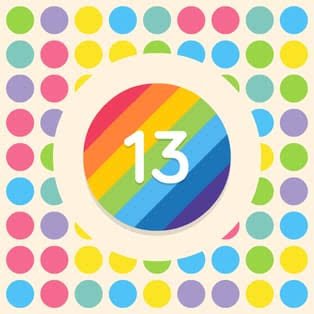
Impossible 13 is a number-merging puzzle game built around one deceptively small target: reach 13. You connect groups of matching numbered circles, turn them into higher values, then keep building upward while trying not to waste useful space.
My early mistake was treating every available match as a good match. That works for the first few numbers, but later it can leave useful circles scattered around the board with no clean way to connect them. I had better results once I started looking one move ahead and asking where the newly created number would land before making the merge.
| Game Detail | Information |
|---|---|
| Game | Impossible 13 |
| Developer | RoboWhale |
| Genre | Puzzle / Number |
| Gameplay Style | Number merging and board planning |
| Main Goal | Create the number 13 |
| Controls | Click and drag / touch |
| Supported Devices | Desktop, Phone and Tablet |
| Browser Release | May 2020 |
| Latest Verified Browser Update | February 2021 |
| Current Verified Rating | 4.2 |
| Multiplayer | Single-player |
The Simple Rule Behind Impossible 13
The game revolves around combining three or more circles carrying the same number.
When a valid group is connected, those circles merge and produce a higher-numbered piece. That new piece then becomes part of the next stage of the puzzle.
The idea is easy to understand:
matching numbers → merge → higher number → repeat
What makes it interesting is that each successful combination changes the board you have available for the next move.
You are therefore solving two problems at once. You need enough identical numbers to make a match, but you also need the result to appear somewhere useful.
How To Play Impossible 13
Start by looking for neighboring circles with matching numbers.
Drag across a group of at least three matching circles and release to combine them. The resulting circle moves the number progression forward.
The long-term objective is to continue this process until you eventually create 13.
I would not rush through obvious low-number matches immediately. Sometimes leaving a group alone for one more move lets another matching circle join it, which can give you a cleaner board afterward.
Drag Controls
Impossible 13 does not use complicated keyboard commands.
Desktop: Click and drag across matching circles.
Phone and tablet: Use the same basic action through touch.
That makes the control scheme easy to learn across different devices.
The MDN Pointer Events guide explains how modern web interfaces can handle mouse, touch, and other pointer input through a shared browser system.
For a deeper technical reference, the W3C Pointer Events specification describes the standard that allows websites to respond consistently to different pointing devices.
Why Three Matching Circles Matter
Two matching numbers are not enough.
The game requires three or more identical circles to form a merge. That rule changes how you should read the board.
A pair may look useless now, but placing another matching number nearby can turn it into your next move.
This is where Impossible 13 differs from simpler matching games. You are not merely searching for something that can disappear immediately. You are trying to build groups that generate the right next number.
Board Position Matters
The number printed on a circle is only half of the puzzle.
Its location matters just as much.
I learned this after creating several useful higher numbers in awkward positions. Technically, I was progressing, but those pieces were too far apart to help each other later.
A stronger move does two things:
- Creates the number you need.
- Leaves that number near pieces it may eventually combine with.
Thinking about both points makes later stages much easier to manage.
Building Toward 13
Reaching 13 takes several generations of combinations.
Low numbers eventually become higher numbers, while higher numbers become increasingly valuable because they required several earlier merges to create.
That means losing access to a well-positioned high-number circle can hurt more than making a bad move near the beginning.
I started treating high numbers almost like anchors. Instead of moving blindly around them, I tried to build matching values toward their position.
That gave me a clearer plan than simply clearing whatever combination appeared first.
Do Bigger Groups Help?
The basic rule only requires three matching circles, but larger connected groups can sometimes give you a better opportunity to reshape the board.
The important question is not always whether you can make a merge.
It is whether making it now produces a useful result.
For example, combining three circles immediately may remove a chance to connect a fourth matching circle on the following move.
That does not mean you should always wait. It means the size and position of the group are worth considering before committing.
A Practical Way To Read The Board
I find Impossible 13 easier when I scan the board in three stages.
First, identify the highest numbers currently available.
Second, look for smaller numbers that are close to becoming those values.
Third, check whether making one of those combinations would place the new circle near something useful.
This turns the game from random matching into a small planning exercise.
It also prevents the common problem of spending several moves improving one side of the board while accidentally isolating important pieces on the other side.
When An Obvious Match Is Actually A Bad Move
A match can be completely legal and still hurt your run.
Suppose three identical circles are available, but combining them produces a new number far away from another matching high-value circle.
You may have increased the number while decreasing your chance of making the next merge.
That was one of the biggest lessons for me. Progress in Impossible 13 is not just about producing larger numbers. It is about producing them in positions that still leave future options.
Why The Puzzle Gets Harder Gradually
Impossible 13 does not need complicated rules to increase difficulty.
The challenge grows naturally because higher numbers require more previous combinations.
Each time you climb another step, you have invested more of the board into producing that piece. At the same time, the number of convenient matching groups can shrink.
This creates a useful tension between short-term moves and the final target.
The early board encourages experimentation. Later play rewards patience and organization.
Who Made Impossible 13?
Impossible 13 was created by RoboWhale, an independent game studio that specializes in HTML5 games.
RoboWhale says it has been developing games since 2010 and moved heavily into HTML5 technology during the following years. Its official portfolio currently includes Impossible 13 alongside projects such as Bouncy Woods, Let Me Grow, Jimbo Jump, Aqua Friends, and Salazar the Alchemist.
You can read more about the studio directly on the official RoboWhale website.
The developer’s own portfolio is particularly useful here because it confirms that Impossible 13 is genuinely one of RoboWhale’s projects rather than relying only on third-party game listings.
Impossible 13 Release And Update History
The verified browser release dates to May 2020.
The latest browser update I could confirm is February 2021.
Those dates refer specifically to the established browser edition. A more recent date displayed on another website may simply mean that the page was added, indexed, or republished later rather than that RoboWhale released a new version.
That distinction is worth making with older HTML5 games because the same title can appear across many websites years after its original browser release.
Desktop, Phone And Tablet Support
Impossible 13 supports desktop, phone, and tablet play.
That cross-device support works particularly well for this game because the central interaction is dragging rather than relying on a large keyboard layout.
On desktop, the mouse gives slightly more precise control when several circles sit close together.
On a touchscreen, the game feels natural because connecting pieces is already based on a dragging gesture.
The web.dev responsive design guide explains the broader web-design principles that help browser content adapt across different screen sizes.
What RoboWhale Usually Builds
Impossible 13 fits RoboWhale’s broader history of lightweight browser games.
The studio describes itself as an independent developer focused on web and mobile games and says its catalogue includes more than 30 projects.
Its portfolio covers puzzle games, arcade titles, children’s games, and branded projects.
That background helps explain why Impossible 13 feels designed around an interaction that works without complicated installation or hardware-specific controls.
Impossible 13 Compared With 2048-Style Puzzles
Impossible 13 may look familiar if you have played number-combination games before, but its interaction is different from the sliding-grid structure commonly associated with games such as 2048.
Instead of moving an entire board at once, you directly connect matching numbered circles.
That gives you more control over which group changes, but it also makes positioning more important because your choices affect the local arrangement of pieces.
Players who enjoy number progression but prefer direct matching may find this system easier to understand.
Players who prefer rigid grid movement may find it less predictable.
Mistakes That Made My Runs Worse
Three habits caused most of my failed attempts.
The first was merging every group immediately.
The second was concentrating on low numbers while ignoring where my highest circles were located.
The third was creating new high numbers in isolated corners of the board.
None of those mistakes feels serious when it happens. The problem normally becomes obvious several moves later when two valuable circles cannot be brought together.
Once I started checking the destination of a merge before making it, my boards remained usable for much longer.
Is Impossible 13 Mostly Luck Or Planning?
There is some uncertainty because you are working with an evolving board, but Impossible 13 gives you meaningful choices.
Where you merge, which group you use first, and which numbers you preserve can all affect later opportunities.
That means I would describe it as a planning puzzle rather than a game that depends entirely on chance.
You cannot control every future situation, but you can avoid many bad ones by keeping related numbers reasonably close together.
What Makes Impossible 13 Different?
Impossible 13 gets a surprising amount of mileage from a very small ruleset.
Its core features are:
- numbered circles
- groups of three or more
- drag-to-connect controls
- steadily increasing numbers
- board-position planning
- desktop and touchscreen support
- a clear final target of 13
There are no complicated characters, missions, inventories, or lengthy tutorials.
The puzzle comes almost entirely from the relationship between number value and board position.
Related Number And Puzzle Games
Impossible 13 fits naturally beside other Mopoga games where combinations and pattern recognition matter more than fast reactions.
Gem 11 is a particularly relevant comparison because it also revolves around building higher values through number-based decisions.
1010 Color Match moves toward placement and pattern management, while Doodle God uses combinations in a more experimental way, asking players to create new concepts rather than simply increasing numbers.
I have not attached guessed Mopoga product URLs to those titles. Mopoga’s product XML sitemap currently cannot be parsed through my web fetcher, so using an invented slug would risk creating broken internal links. The exact canonical URLs should be taken from the live product-sitemap.xml when accessible.
About Impossible 13
Impossible 13 is easy to understand in the first minute but becomes more thoughtful as higher numbers begin appearing.
The goal never changes: connect matching circles and eventually produce 13.
What changes is how carefully you need to manage the board.
I find the game strongest when I stop thinking about the next available match and start thinking about the next two numbers I want to create. That small shift turns what initially looks like a basic matching game into a much more deliberate puzzle.



Reviews
There are no reviews yet.