

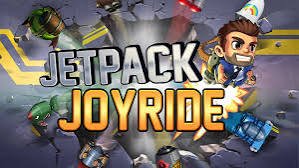
Jetpack Joyride is an endless-running action game from Halfbrick Studios where Barry Steakfries travels through a constantly moving laboratory. You control his height with a simple hold-and-release input while trying to stay in the run for as long as possible, collect coins, finish missions, and use temporary vehicles that change how movement feels. My first mistake was holding the flight control for too long. Shorter taps gave me much better control because Barry could move up and down without constantly reaching the top or bottom of the screen.
| Game Detail | Information |
|---|---|
| Game | Jetpack Joyride |
| Developer | Halfbrick Studios |
| Genre | Endless Runner, Arcade, Action |
| Main Character | Barry Steakfries |
| Gameplay Style | Automatic forward movement with one-touch height control |
| Main Controls | Hold to rise, release to fall |
| Original Release | September 1, 2011 |
| Current Android Update | March 1, 2026 |
| Platforms | Mobile and supported browser/PC editions |
| Progression | Missions, ranks, coins, gadgets and cosmetics |
| Main Features | Vehicles, missions, gadgets, costumes and events |
| Multiplayer | Primarily single-player |
Barry Moves Forward Automatically
Jetpack Joyride removes traditional left-and-right movement from most of the run.
Barry continuously travels forward while you decide how high or low he should be.
That sounds extremely simple, but the game becomes much faster as the distance increases.
The real skill is making small corrections.
I found that holding the input until Barry reached the ceiling created more problems than it solved. Short taps leave more room to react when the next obstacle pattern appears.
How To Play Jetpack Joyride
The main control is built around one action.
Controls
- Hold the main input: Barry rises
- Release: Barry falls
- Mobile: Touch and hold the screen
- Supported desktop editions: Mouse or Spacebar controls may be available
Google Play describes Jetpack Joyride as using simple one-touch controls.
For browser editions, this kind of input can be handled through standard browser events. The MDN Pointer Events guide explains how browsers can process mouse and touch interaction using related input APIs.
Distance Is The Main Run Goal
Each attempt begins simply and becomes progressively more demanding.
The longer Barry stays in the run, the farther the distance counter climbs.
That gives the game an immediate goal even before missions and upgrades are considered.
I prefer treating distance as feedback rather than chasing a record every time.
If one run ends much earlier than usual, I look at what changed.
Usually I was making larger movements or reacting too late to a new pattern.
Missions Give Each Run Another Purpose
Jetpack Joyride includes missions that provide goals beyond simply traveling farther.
Google Play currently highlights missions as part of the ranking system, while Halfbrick has supported mission-based progression throughout the game’s long history.
This keeps repeated runs from feeling identical.
One attempt may be mostly about distance.
Another may encourage collecting a certain amount of currency or interacting with a particular game feature.
Completing missions helps advance your rank and gives regular progression even when you do not set a new distance record.
Coins Build Long-Term Progress
Coins appear throughout runs and act as one of the main progression currencies.
They can contribute toward additional customization and other game content.
I found that chasing every single coin was not always worth disrupting a comfortable flight path.
A group of coins is useful when it lines up naturally with your route.
If reaching it requires a sudden movement into an awkward part of the screen, keeping the run alive can be more valuable.
The important balance is collecting rewards without forgetting the main movement challenge.
Temporary Vehicles Change The Controls
Vehicle pickups temporarily transform how the run feels.
Jetpack Joyride has become well known for unusual vehicles, including the Gravity Suit, Profit Bird, Lil Stomper, Teleporter, and other machines.
Google Play currently highlights large vehicles and mechanical transformations as major features.
Each one changes movement enough that the normal jetpack rhythm may no longer apply.
I usually spend the first moment after a vehicle pickup understanding its movement again rather than immediately trying to collect everything on screen.
Gravity Suit
The Gravity Suit changes the normal rise-and-fall relationship.
Instead of controlling Barry like the standard jetpack, the vehicle creates a different movement pattern based around switching between surfaces.
That means habits from normal flight do not transfer perfectly.
The useful approach is to read the current vehicle first.
Jetpack Joyride intentionally makes its vehicles feel different so collecting one briefly turns the same endless run into another kind of movement challenge.
Lil Stomper
Lil Stomper is another recognizable vehicle from the game.
Its movement is heavier and more mechanical than Barry’s standard flight.
The point of these vehicles is variety.
You may spend most of a run using one-touch jetpack movement and then suddenly need to adapt to a completely different rhythm.
That constant mechanical change helps Jetpack Joyride avoid feeling like one identical corridor repeated forever.
Profit Bird And Other Vehicles
Profit Bird is another long-running vehicle from Jetpack Joyride.
The game has continued adding and rotating content over its long lifespan, so not every version necessarily presents every feature in exactly the same way.
The safest way to understand the vehicle system is as a collection of temporary movement modes.
You pick one up during a run, use its special movement style for a period, and eventually return to Barry’s normal jetpack controls.
Gadgets Change Future Runs
Jetpack Joyride also lets players equip gadgets.
These provide useful modifiers and additional progression between attempts.
Google Play currently lists gadgets and power-ups among the game’s central systems.
I prefer changing one gadget at a time.
If you change an entire loadout at once, it becomes difficult to tell which addition actually improved the next run.
A single adjustment makes the effect much easier to notice.
Costumes Add Visual Progression
Barry can also be customized with different outfits.
These cosmetic rewards give players something to collect without changing the basic one-touch movement system.
Halfbrick has supported costumes for years, including large costume additions in earlier updates. A major 2013 update alone introduced 32 new costume pieces alongside daily challenges and other content.
That helps explain why Jetpack Joyride remained expandable long after its original launch.
Daily Challenges Expanded The Game
Halfbrick added a substantial daily challenge system in version 1.6.
That update introduced a five-day reward structure connected to the S.A.M. feature, with rewards improving across consecutive activations.
Systems like these give returning players something different from simply repeating an endless run.
The core movement remains familiar.
What changes is the short-term objective surrounding it.
Obstacle Patterns Become Faster
Jetpack Joyride increases pressure as a run continues.
The game gradually moves faster, meaning the same size movement gives you less time to correct a mistake later in the run.
This is where controlled tapping becomes especially useful.
Large up-and-down movements work when the screen is calm.
At higher speed, they can leave Barry in a poor position before you have time to react.
I try to keep Barry closer to a flexible middle height whenever the upcoming path allows it.
That leaves more room in both directions.
Stay Flexible Instead Of Hugging One Edge
Flying near the ceiling all the time feels safe until the next obstacle pattern makes that area difficult.
The same problem appears if you remain near the floor.
I found the central part of the screen easier because it leaves room to move either upward or downward.
That does not mean Barry should stay perfectly centered.
The useful idea is preserving options.
A position with space on both sides gives you more ways to react.
Watch Ahead Of Barry
Focusing directly on Barry makes the game harder.
The important information is usually arriving from farther ahead on the screen.
Once I started looking slightly forward, upcoming gaps became easier to read.
This is a common idea in scrolling games.
Your character’s current position tells you where you are.
The space ahead tells you where you need to be next.
That small shift in attention made my movements much smoother.
Do Not Chase Every Reward
Coins, mission targets, pickups, and other rewards compete for attention.
Trying to collect everything can break an otherwise good run.
I use a simple rule:
if the reward fits naturally into the route, take it.
If reaching it requires a dramatic correction, consider leaving it.
The game will provide more opportunities.
Protecting a strong run is often more valuable than forcing one difficult pickup.
Spin Tokens And Run-End Rewards
Jetpack Joyride has historically included spin tokens that contribute to a reward sequence after a run.
These provide another reason to collect certain items while traveling.
Because the game has received many updates and platform variations, reward presentation can differ between editions.
The broader design idea remains consistent:
your run can produce progress even after Barry stops moving.
Distance, missions, collected currency, and other rewards all feed into the next attempt.
Original Release Date
Halfbrick officially announced Jetpack Joyride as available for iPhone and iPad on:
September 1, 2011
The company’s own announcement confirms that launch date.
This is the most useful original release date for the game.
Later Android, PC, browser, and subscription-platform versions should be treated as later platform releases rather than replacing the September 2011 debut.
Jetpack Joyride Is Still Maintained
Jetpack Joyride has had an unusually long active life.
Google Play currently lists the Android version as updated on:
March 1, 2026
It also reports more than 100 million Android downloads, while Halfbrick says the broader game has reached hundreds of millions of players across platforms.
That continued maintenance is significant for a game originally released in 2011.
Who Created Jetpack Joyride?
Jetpack Joyride was created by Halfbrick Studios, an Australian game developer founded in Brisbane.
Halfbrick is also known for games including:
- Fruit Ninja
- Jetpack Joyride 2
- Dan the Man
- Monster Dash
- Fruit Ninja 2
The developer’s current official site still features Jetpack Joyride as one of its major games.
Barry Steakfries
Barry Steakfries is the main character.
He became one of Halfbrick’s recognizable characters and later appeared across additional games in the company’s catalogue.
Jetpack Joyride helped establish the character’s best-known setting: an endless run through a secret laboratory filled with strange gadgets, machines, collectibles, and exaggerated science-fiction obstacles.
The presentation is deliberately cartoonish rather than realistic.
Why One-Touch Controls Work So Well
Jetpack Joyride shows how a game can build substantial variety around almost one input.
Holding and releasing controls Barry’s vertical position.
The rest of the challenge comes from:
- increasing speed,
- changing obstacle patterns,
- different vehicles,
- missions,
- collectibles,
- gadgets,
- and progression systems.
The control does not need to become more complicated because the situations around it keep changing.
That makes the game approachable while still leaving room for improvement.
Browser And Mobile Versions May Differ
Jetpack Joyride has appeared across several platforms during its long history.
That means a browser edition may not have the exact same:
- update date,
- event schedule,
- store content,
- progression balance,
- or feature set
as the current Android or iOS edition.
For a Mopoga browser page, the important core mechanics remain Barry’s automatic forward movement, hold-and-release flight, distance runs, collectibles, missions, gadgets, and temporary vehicles.
Mobile-store dates should not automatically be presented as browser update dates.
Common Jetpack Joyride Mistakes
The first mistake is holding the flight input too long.
Another is looking only at Barry instead of the path ahead.
I also found that chasing every coin caused unnecessary movement.
A fourth mistake is trying to control every temporary vehicle exactly like the standard jetpack.
Finally, avoid assuming a poor run means your entire approach needs changing.
Often one habit, such as making smaller corrections, is enough to improve consistency.
A Better Run Routine
My preferred approach is:
- Begin with small taps.
- Keep enough space above and below Barry.
- Look ahead rather than directly at the character.
- Collect rewards that fit the current route.
- Adapt immediately when a vehicle changes movement.
- Use missions as secondary goals.
- Learn from the specific movement that ended the previous run.
This keeps the game understandable even as the speed increases.
What Makes Jetpack Joyride Different?
Jetpack Joyride combines:
- one-touch flight,
- endless-runner progression,
- Barry Steakfries,
- increasing speed,
- temporary vehicles,
- missions,
- coins,
- gadgets,
- outfits,
- and long-running events and updates.
The controls take seconds to learn.
The challenge comes from maintaining increasingly precise movement while the game changes what appears ahead.
That balance helped make Jetpack Joyride one of Halfbrick’s most recognizable games.
Related Game Categories
Jetpack Joyride fits naturally into:
- Endless Runner Games
- Arcade Games
- Action Games
- Skill Games
- Flying Games
- Distance Games
- Mobile Games
- Casual Games
Its strongest identity is an endless runner built around automatic forward movement and simple hold-and-release flight controls.
About Jetpack Joyride
Jetpack Joyride sends Barry Steakfries through an endlessly scrolling laboratory using one of the simplest movement systems in an arcade game.
Hold to rise, release to fall, watch the route ahead, collect coins, complete missions, use temporary vehicles, equip gadgets, and keep improving your distance across repeated attempts.
Halfbrick originally released the game in September 2011 and has continued maintaining it for years, with the Android edition still receiving updates in 2026.
The biggest improvement in my own approach came from making smaller movements. Once I stopped flying directly from floor to ceiling and started preserving room in both directions, longer runs became much more consistent.

Reviews
There are no reviews yet.