

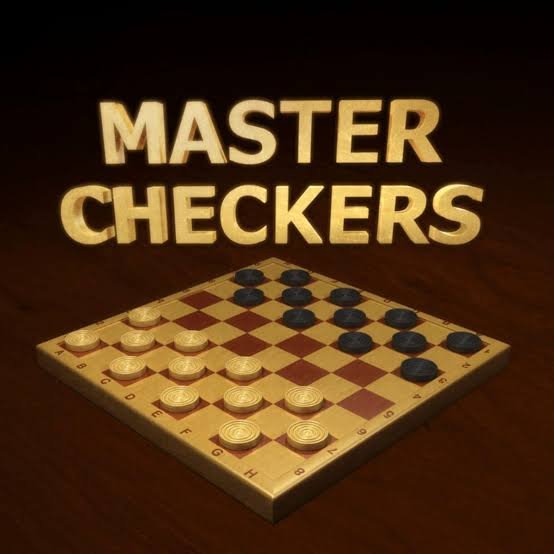
Master Checkers is a digital version of the classic checkers board game built around the rules of Italian Checkers. Two players move pieces diagonally across the dark squares, capture opposing pieces by jumping over them, and try to promote pieces into kings while reducing the opponent’s available moves.
The first thing that caught me out was assuming every version of checkers follows exactly the same rules. It does not. Master Checkers uses the Italian variant, where capture priorities and king rules can differ from the American checkers many players already know. Once I stopped relying on habits from other versions and paid attention to the legal moves shown on the board, the game made much more sense.
| Game Detail | Information |
|---|---|
| Game | Master Checkers |
| Developer | Code This Lab |
| Genre | Board / Strategy |
| Ruleset | Italian Checkers |
| Gameplay Style | Turn-based piece movement and captures |
| Controls | Mouse click / touch |
| Players | 1 or 2 depending on version |
| Browser Technology | HTML5 / JavaScript |
| Original HTML5 Release | 2015 era |
| Latest Verified HTML5 Update | March 8, 2022 |
| Current Mobile Edition | Master Checkers Multiplayer |
| Mobile Latest Verified Update | August 12, 2026 |
| Supported Browsers | Chrome, Firefox, Safari, Opera and Edge |
| Mobile Support | Yes |
Code This Lab’s original HTML5 listing confirms that Master Checkers was developed in HTML5 and JavaScript, uses the Italian Checkers ruleset, and was designed to scale across common mobile devices.
How A Match Begins
A standard Master Checkers game starts with each side controlling a set of pieces arranged across the dark squares of an 8×8 board.
Players then take turns.
Normal pieces move diagonally forward, while captures happen by jumping over an opposing piece into an empty square beyond it.
The basic flow is:
move → create pressure → capture → reach the opposite side → promote to king
That sounds straightforward, but the Italian rules make some positions more restrictive than players coming from other checkers versions may expect.
Captures Are More Important Than Ordinary Moves
One of the biggest rules to understand is that a capture is not simply optional when one is available.
Italian Checkers uses mandatory capturing.
That means you cannot always move the piece you originally intended to move if another piece has a required capture available.
The International Draughts Federation’s overview of Italian Draughts rules provides useful background on these mandatory capture rules.
This is where I made several early mistakes.
I would plan a positional move and then realize the game would not allow it because a capture existed somewhere else on the board.
Checking for captures before planning a normal move saves a lot of confusion.
What Makes Italian Checkers Different?
Master Checkers is specifically based on Italian Checkers, sometimes called Italian Draughts.
The game still uses familiar diagonal movement, captures, and kings, but some rule details are stricter.
Important differences include:
- captures are mandatory
- normal pieces move diagonally forward
- kings can move forward or backward
- multiple capture paths can be subject to priority rules
- kings have special importance when choosing between legal captures
The International Draughts Federation maintains a dedicated explanation of the Italian version, which is useful if you already know another checkers ruleset and want to understand why certain moves behave differently.
Moving Regular Pieces
A normal piece moves one diagonal square forward into an empty playable square.
You cannot move directly forward, sideways, or onto a light square.
That makes board position extremely important.
A piece may appear close to an opponent but still be unable to interact with it because the diagonal alignment is wrong.
I find it useful to look at the two diagonal squares ahead of a piece before deciding whether it is actually safe.
That small habit prevents a lot of moves that seem harmless at first.
How Capturing Works
A capture occurs when an opposing piece sits diagonally beside your piece and the square immediately behind it is open.
Your piece jumps over the opponent and lands on the empty square.
The jumped piece is removed.
If another legal capture becomes available from the new position, the move may continue as a multiple capture.
That is where a single turn can completely change the board.
I learned not to judge a capture only by the first piece removed. The landing square matters because it can open another capture or leave the moving piece exposed.
Multiple Captures
Multi-jump situations are one of the most important parts of the game.
A piece can sometimes capture more than one opponent during the same turn.
Italian rules also introduce priorities when more than one capture sequence is possible.
According to the International Draughts Federation, Italian Draughts uses specific rules to determine which capture sequence must be chosen when several are available.
This means Master Checkers is not always asking:
“Which capture do you prefer?”
Sometimes the rules already determine which route is legal.
Reaching The King Row
A regular piece becomes a king after reaching the farthest row on the opponent’s side.
Kings are more flexible because they can move diagonally both forward and backward.
That makes promotion one of the main long-term goals.
I used to push pieces toward the final row too aggressively.
That can work, but a piece that advances without support can become an easy target before it ever gets promoted.
A slower route that keeps nearby pieces connected is often easier to manage.
Why Kings Matter So Much
Kings are not only ordinary pieces with backward movement.
In Italian Checkers, they also matter when capture priorities are determined.
That makes a king especially valuable in complex positions.
Once I get one, I try not to immediately send it into the middle of several opposing pieces just because its movement is more flexible.
Its real value comes from giving you more options later.
Master Checkers Controls
The browser game uses simple pointer controls.
Desktop: Click a piece, then click a legal destination.
Phone or tablet: Tap the piece and then tap the destination.
The HTML5 version was specifically built to scale to common mobile devices.
There is no need to memorize keyboard commands.
For technical background, the MDN Pointer Events documentation explains how modern browser games and interfaces can support mouse and touchscreen interaction through a common input system.
Look For Forced Moves First
The most useful routine I developed is extremely simple.
Before planning anything else, scan the board for captures.
If one exists, your normal movement options may not matter.
My turn now usually starts with three questions:
- Do I have a mandatory capture?
- Is there more than one possible capture route?
- Where will the capturing piece finish?
Only after answering those do I think about ordinary positional moves.
That reduces accidental planning around moves the rules would never allow.
Keep Your Pieces Connected
A single checker advanced far ahead of the rest can look dangerous, but it is often easier to surround.
Pieces that remain reasonably close together can protect important diagonals and reduce easy capture opportunities.
I used to chase quick promotions by pushing one piece forward repeatedly.
That occasionally worked, but more often it left gaps behind.
Keeping a more balanced shape made it harder for the other side to break through.
Do Not Open The Back Row Too Early
The pieces closest to your own edge can help protect the promotion squares that the opponent is trying to reach.
Moving every back-row piece early can make those squares easier to access.
That does not mean they should never move.
It means I usually want a reason before opening that area.
This becomes more important once the opponent has several pieces approaching your side of the board.
When Trading Pieces Makes Sense
Not every capture is automatically a long-term advantage.
Sometimes taking one opposing piece lets the other player immediately take yours.
That can still be worthwhile if the exchange improves your position or removes an important piece.
The important point is to look one move past the capture.
I made much better decisions once I stopped counting only the pieces removed immediately and started considering what the board would look like after the opponent’s response.
Playing Against The Computer
The Code This Lab versions of Master Checkers include play against computer-controlled opposition.
This is useful for learning because you can become familiar with legal moves without needing another player present.
I would use early computer matches mainly to understand:
- mandatory captures
- multiple jumps
- promotion
- king movement
- board positioning
Winning matters less during those first few games than noticing why certain moves are or are not available.
Local Two-Player Games
Master Checkers also supports two-player play in versions that allow players to share the same device.
This changes the feel of the game because another person may make choices that a computer opponent would not.
Local matches are especially useful once both players understand that Master Checkers follows Italian rather than American rules.
Otherwise, disagreements can happen simply because each player expects a different capture rule.
Online Multiplayer Version
Code This Lab also publishes Master Checkers Multiplayer, a newer edition built around both local and online matches.
The current Google Play listing includes:
- play against the CPU
- local two-player mode
- online multiplayer
- multiple languages
- several checkers variants
The mobile edition was updated on August 12, 2026 and has more than 100,000 Android downloads.
This newer mobile version should not be confused with the older standalone HTML5 browser package.
American Pool And Other Variants
The newer multiplayer edition has expanded beyond only the original Italian rules.
Code This Lab’s latest mobile release notes mention the addition of American Pool and improvements to capture-path selection.
That means the mobile app now contains broader draughts options than the original Master Checkers browser build.
If you are playing the classic browser version, Italian Checkers remains the important ruleset to understand.
Who Created Master Checkers?
Master Checkers was created by Code This Lab.
The developer has produced a large collection of HTML5 games, including board games, card games, sports games, and arcade titles.
The original Master Checkers package was built with:
- HTML5
- JavaScript
- CreateJS
rather than using Construct.
The developer’s original CodeCanyon listing confirms those technical details and identifies Code This Lab as the creator.
Release And Update History
Master Checkers has been available as an HTML5 game for more than a decade.
The original marketplace listing dates the product to around 2015.
Several later updates followed:
- January 2016: CTL Arcade integration
- February 2017: interface and fullscreen additions
- 2018: sound and preloader improvements
- June 2019: loading and fullscreen fixes
- October 2021: iOS and audio-related updates
- March 8, 2022: latest verified HTML5 package update
The complete changelog is preserved on the developer’s CodeCanyon listing.
The separate mobile multiplayer version has continued receiving newer updates in 2026.
Browser And Mobile Support
The original HTML5 package lists compatibility with:
- Chrome
- Firefox
- Safari
- Opera
- Edge
It was also designed to scale across common mobile devices.
That suits checkers well because the game does not depend on fast keyboard input.
A mouse gives precise piece selection on desktop, while touchscreen tapping feels natural on a phone or tablet.
What Makes Master Checkers Different?
Master Checkers is easy to mistake for a generic digital checkerboard.
The Italian rules give it more character.
Its main features include:
- 8×8 board
- diagonal movement
- mandatory captures
- multiple jumps
- king promotion
- Italian capture priorities
- computer opponent
- local two-player support
- mobile compatibility
- online multiplayer in the newer edition
For someone who already understands American checkers, the biggest challenge is not learning how pieces move.
It is unlearning assumptions about which capture you are allowed to choose.
A Better Way To Read The Board
I find the game easier when I read the board in layers.
First, look for forced captures.
Second, look at which pieces are close to promotion.
Third, check whether moving one piece exposes another.
Finally, consider what response the opponent is likely to have.
This takes a little longer than moving the first available piece, but checkers rewards that patience.
Most bad turns I made came from looking only at my intended move instead of the position that would remain afterward.
Is Master Checkers Mostly For Experienced Players?
Not necessarily.
The movement rules are simple enough for beginners to understand quickly.
The challenge comes from seeing several turns ahead.
A new player can start by learning:
diagonal moves → captures → multiple jumps → kings
Then the stricter Italian capture priorities can be added gradually.
That makes Master Checkers accessible without making every match predictable.
Related Board And Puzzle Games On Mopoga
Master Checkers fits naturally with Mopoga games based on planning rather than quick reactions.
Refuge Solitaire is a useful alternative for players who prefer card-based decision making, while Mahjong Firefly focuses more on matching and board clearing.
Games such as Impossible 13 also reward looking ahead, even though their mechanics are completely different from checkers.
I checked Mopoga’s indexed pages for exact canonical URLs but could not verify those product URLs through the current web index, so I have not invented slugs.
The source-of-truth internal link feeds remain:
https://imopoga.com/product-sitemap.xml
https://imopoga.com/product_cat-sitemap.xml
When those exact URLs are accessible, the best approach is to add 2–3 verified related board, puzzle, or strategy links naturally inside relevant sections rather than forcing unrelated links into the article.
About Master Checkers
Master Checkers is a straightforward HTML5 board game that becomes much more interesting once you understand that it follows Italian Checkers rules.
Moving pieces is easy.
Choosing the right piece, handling mandatory captures, protecting promotion lanes, and making good use of kings are where the real decision-making happens.
The biggest improvement in my own play came from checking for forced captures before planning anything else. That one habit prevents a surprising number of wasted ideas.




Reviews
There are no reviews yet.