

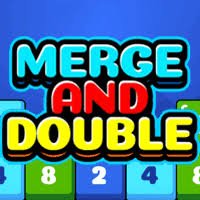
Merge and Double is a number puzzle game from Adgard where matching blocks combine into larger values. The main idea is simple: work with equal numbers, create useful groups, trigger merges, and keep building larger tiles without letting the board become difficult to manage.
What makes the game more interesting than it first looks is that every move changes the space available for the next one. I found that chasing the largest number immediately was less useful than keeping several possible matches open. A slightly smaller merge that clears space can sometimes be much more valuable than a big number trapped in the wrong part of the board.
| Game Detail | Information |
|---|---|
| Game | Merge and Double |
| Developer | Adgard |
| Genre | Brain, Number Puzzle |
| Gameplay | Number matching, merging, power-ups |
| Controls | Mouse click or touchscreen tap |
| Supported Devices | Desktop, Phone, Tablet |
| Release | April 2025 |
| Latest Verified Update | May 2025 |
| Current Rating | 4.1 |
| Current Votes | 19K+ |
| Main Goal | Create larger numbered blocks and earn a high score |
| Multiplayer | Single-player |
The current Poki listing identifies Adgard as the developer and classifies Merge and Double as a brain game built around combining matching numbers into larger values.
How Merge and Double Works
The board contains numbered blocks.
Your goal is to create groups of matching values and turn them into larger numbers.
When matching blocks successfully combine, the resulting block has a higher value.
The number sequence therefore keeps moving upward:
2 → 4 → 8 → 16 → 32 → 64
and continues beyond that as long as you can keep creating useful matches.
The current game description focuses on lining up equal-value tiles, merging them, and building the largest number possible.
The Exact Merge Rule
A more detailed current set of instructions explains an important part of the mechanic.
You can select a block to increase its value. When three or more connected blocks of the same number form a group, they combine into one block with double the previous value. The new merged block appears around the position you selected.
That means the game is not simply about finding two identical numbers.
Position matters.
You want equal values close enough together that your next change can create a larger connected group.
Merge and Double Controls
The controls are simple:
- Desktop: Click blocks using the mouse
- Phone: Tap blocks on the touchscreen
- Tablet: Tap blocks on the touchscreen
The current Poki version confirms support for desktop, phone, and tablet.
There are no movement keys or complicated keyboard combinations.
All of the strategy comes from choosing the right block at the right time.
Do Not Click Random Blocks
The biggest mistake I made at first was treating each available block independently.
You can change a number, but that does not automatically make the move useful.
Before clicking, I now check what surrounds the tile.
If increasing one block creates three matching values beside each other, the move can trigger a merge.
If it creates a number with no matching neighbors, it may make the board harder to organize.
That small check makes a big difference.
Connected Tiles Matter More Than Isolated Tiles
A large tile is useful only if you can eventually connect it with other tiles of the same value.
For example, one 64 sitting alone may look impressive.
But several smaller values positioned near matching partners can give you much more room for future combinations.
I prefer to think in groups rather than individual numbers.
The question becomes:
What can this tile connect with next?
That is much more useful than simply asking which number is currently largest.
Try To Create Chain Reactions
A good merge can sometimes prepare another merge immediately afterward.
Imagine that one group turns into an 8.
If that new 8 appears beside other 8s, the board may already be ready for another combination.
This is where the puzzle becomes satisfying.
You are not simply making one match at a time.
You are arranging the board so one successful move helps create the next one.
Planning these short chains usually gives better results than reacting to whatever number catches your attention first.
The Merge Position Matters
The resulting block appears around the selected position, so where you trigger a merge can influence the layout afterward. Current instructions specifically tell players to consider where the new block will appear when setting up the next combination.
That makes placement part of the puzzle.
If you can choose between several blocks in a connected group, think about which resulting position will leave the best neighboring numbers.
Sometimes the same merge can create a very different board depending on where you trigger it.
Keep Useful Space Available
The board becomes harder when useful numbers are separated by values that cannot combine.
I try not to fill every part of the board with isolated high numbers.
Instead, leave areas where future matching values can meet.
This gives you more options when the next useful merge appears.
A crowded board is not always a lost board, but it gives you less flexibility.
Power-Ups Can Rescue A Difficult Board
Merge and Double includes several power-ups.
The current game instructions identify tools including:
- 2x: Doubles a selected block
- Shuffle: Rearranges the board
- Hammer: Removes a block
- Switcher: Exchanges the positions of two blocks
These tools are useful when normal moves no longer create clean combinations.
I would not spend them automatically.
They are most valuable when they solve a specific board problem.
Use 2x To Complete A Group
The 2x power-up can increase the value of a chosen block.
Its best use is often not simply making your largest tile even larger.
Instead, look for a tile that is one step below nearby matching numbers.
Doubling that tile can create a group immediately.
That gives the power-up a clear purpose rather than using it just because it is available.
The Hammer Is Mainly About Space
The Hammer removes a chosen block.
That makes it useful when one awkward number separates several tiles that could otherwise work together.
I would look for the block causing the biggest positional problem.
Removing a random low-value tile may not change much.
Removing the right obstruction can reopen an entire section of the board.
Shuffle Changes The Whole Puzzle
Shuffle rearranges the board.
That makes it different from tools that affect only one block.
It can be useful when your numbers are badly separated and there are few productive moves available.
The downside is that rearranging everything also removes the pattern you were already planning.
I see it more as a recovery tool than a normal move.
Use it when the existing arrangement has become genuinely difficult.
Switcher Lets You Fix Position
Switcher swaps the positions of two blocks.
This can be very useful because Merge and Double depends heavily on adjacency.
You may already have the right values on the board, but they are sitting in the wrong places.
Instead of changing the numbers themselves, Switcher lets you improve their positions.
That can create a merge without rebuilding the whole board.
Large Merges Can Earn Coins
Current detailed instructions also state that merging more than four blocks at once can earn coins.
That gives larger groups an extra benefit.
You are not only creating a higher-value tile.
You may also gain resources that help with power-ups later.
This makes it worth checking whether you can expand a group before triggering it immediately.
Do Not Merge Every Group As Soon As Possible
Seeing three matching tiles can make you want to merge immediately.
Sometimes that is correct.
But there are situations where waiting for a fourth or fifth matching block creates a more useful result.
I like to check nearby values before committing.
If another matching tile can easily join the group, waiting one move can improve the board and potentially provide an extra reward.
Work Backward From The Number You Need
Suppose you want to create 64.
You know you first need the right 32s.
Those 32s come from 16s.
The 16s come from smaller groups.
Thinking backward like this helps you identify which lower-value numbers are actually important.
It also stops you from changing a useful tile just because another move is available.
Keep Similar Values Near Each Other
One of the simplest useful habits is keeping similar numbers in the same general area.
You do not need a perfect layout.
You just want to avoid a board where every equal value is separated from its partners.
When two or three values are already near each other, future merges require fewer corrective moves.
That makes the board much easier to manage.
Bigger Is Not Always Better Immediately
The title encourages doubling, but the largest possible number is not always the best immediate move.
Imagine you can create one very large tile on one side of the board.
If there is no matching value anywhere near it, that tile may sit unused for a long time.
A smaller merge that opens space and creates another chain can be more productive.
The game rewards large numbers, but position decides how useful those numbers become.
Merge and Double Is An Endless-Style Puzzle
The main challenge is reaching increasingly large blocks and pushing your score higher rather than completing a traditional story or race.
Coolmath Games categorizes the title as an endless puzzle and describes the goal as reaching the highest-value block possible.
That structure makes it suitable for short sessions.
You can focus on beating your previous number or score rather than completing a long campaign.
It Is Different From Traditional 2048
Merge and Double may remind players of 2048 because both games combine equal numbers into doubled values.
The actual controls are different.
In standard 2048, arrow keys or swipes move all tiles across a 4×4 grid, and matching tiles combine when they collide.
Merge and Double is more selective.
You interact with individual blocks and build connected groups rather than sliding the entire board in one direction.
That difference gives it more of a match-style puzzle feel.
Desktop And Mobile Play
The current browser version supports:
- Desktop
- Phone
- Tablet
Because the game only needs clicks or taps, the main mechanic transfers easily between devices.
Desktop gives you a larger view of the board.
Phone and tablet controls feel natural because selecting a tile only requires tapping it.
The strategy remains essentially the same.
Who Created Merge and Double?
Merge and Double was created by Adgard.
The current Poki listing credits Adgard directly and also connects the developer with several other puzzle and card games.
The game fits Adgard’s broader catalogue of simple browser puzzles built around matching, numbers, cards, and tile systems.
Other Games From Adgard
The current developer catalogue associated with Merge and Double includes titles such as:
- Merge Mosaics
- Merge to Million
- Merge Solitaire
- Freecell Solitaire
- Shenzhen Mahjong
- Pet Mahjong 3D
- Match Bee
- Bubble Storm
- MadZOOng
- One Hundred Castles Solitaire
If you enjoy the number-combination side of Merge and Double, Merge to Million is especially close in theme.
Release And Update History
The current Poki record gives:
Release: April 2025
Latest listed update: May 2025
A later Coolmath Games publication appeared in November 2025, but that is the release date of its hosted version rather than evidence that the game itself first appeared then.
For the current main browser record, April 2025 is the clearest release date.
Current Merge and Double Rating
The current English Poki listing shows approximately:
4.1 from more than 19,000 votes.
The exact total changes as more people rate the game.
For that reason, the figure should be treated as a current platform snapshot rather than a permanent game statistic.
Is Merge and Double Multiplayer?
Merge and Double is designed as a single-player number puzzle.
The objective is personal score and number progression rather than competing in a live online match.
There is no multiplayer matchmaking system described by the current primary listings.
That means you can start immediately without waiting for another player.
Common Merge and Double Mistakes
The first mistake is clicking without checking neighboring values.
Another is creating a large number in an isolated position.
Using power-ups too early can also leave you without useful tools when the board becomes genuinely difficult.
Players can also trigger a small group immediately when waiting could allow a larger merge.
Finally, focusing only on the highest number can cause you to ignore the space and positioning needed to keep playing.
A Better Way To Build Large Numbers
Start by scanning the whole board.
Identify groups that are close to forming.
Check whether changing one tile will connect three or more matching values.
Before triggering the merge, look at where the resulting block will appear.
Then see whether that new block can connect with another group.
Keep power-ups available for situations where normal moves cannot fix the layout.
That gives you a simple approach:
match → position → merge → reassess
I found this much more reliable than simply doubling whatever tile looked useful at first.
Related Categories
Merge and Double fits naturally into:
- Brain Games
- Number Games
- Merge Games
- Matching Games
- Puzzle Games
- Strategy Games
- Mobile Games
- Single-Player Games
The current Poki listing places it primarily in Brain Games, while Coolmath Games categorizes it as an endless strategy puzzle.
What Makes Merge and Double Different?
Merge and Double takes a very small rule and turns it into a board-management puzzle.
Equal numbers need to meet.
Successful groups create larger values.
Larger values create new possibilities.
But every change also affects where your next match can happen.
That is why the game becomes more thoughtful than simply doubling numbers.
The best move is often the one that leaves the board useful afterward, not necessarily the move that creates the biggest number immediately.




Reviews
There are no reviews yet.