
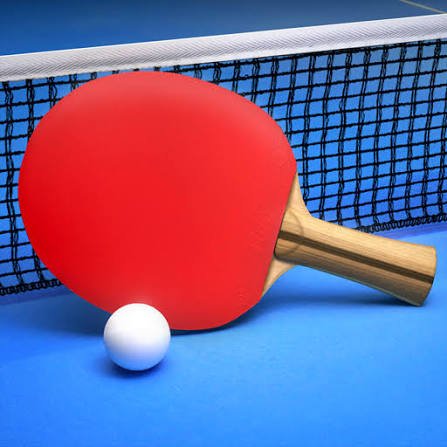
Ping Pong is a simple table tennis game from MarketJS where you control a paddle, return the ball across the table, and try to reach 10 points before the computer opponent. The game has very few controls, but paddle speed and movement direction affect how the ball comes back, which gives rallies more variety than the basic setup suggests.
What worked best for me was stopping myself from making large mouse movements after every return. Keeping the paddle near the likely return path made it much easier to react, while sudden movements often sent me too far away from the next shot.
| Game Detail | Information |
|---|---|
| Game | Ping Pong |
| Developer | MarketJS |
| Genre | Skill, Sports |
| Gameplay Style | Table tennis, rallies, AI opponent |
| Controls | Left mouse button and drag |
| Mobile Controls | Touch and drag |
| Supported Devices | Desktop, Phone, Tablet |
| Browser Release | July 2021 |
| Latest Verified Update | April 2022 |
| Current Rating | 3.7 |
| Current Votes | 130K+ |
| Winning Score | First to 10 |
| Multiplayer | Single-player |
MarketJS officially describes Ping Pong as a single-player HTML5 table tennis game with responsive support for different screen sizes, while the current browser listing confirms the July 2021 release and April 2022 update.
How Ping Pong Works
The objective is straightforward.
Hit the ball across the table.
Keep the rally alive.
Force the computer opponent to miss.
The first player to reach 10 points wins the match. MarketJS confirms this scoring target directly on the game’s official product page.
The controls stay simple from beginning to end, so most improvement comes from timing and positioning rather than learning new buttons.
Ping Pong Controls
On desktop:
- Hold the left mouse button
- Drag to move the paddle
On phone or tablet:
- Touch the screen
- Drag your finger to position the paddle
The current browser listing confirms mouse-drag movement, while MarketJS describes the game as responsive across smartphones, tablets, and desktops.
Paddle Speed Changes The Shot
One of the more interesting mechanics is that the speed of your paddle movement affects the return.
MarketJS specifically says players can control shot speed by moving the paddle faster or slower.
That means simply reaching the ball is only the first part.
A faster movement can produce a different return from a slower, controlled one.
I found it much easier to learn this by changing speed deliberately instead of moving the paddle randomly.
Direction Can Make Returns Harder
You can also influence where the ball travels.
Moving the paddle differently as contact happens can change the direction of the return and make the computer opponent work harder.
MarketJS describes the game as allowing players to create spin-like returns that confuse the opponent.
The game simplifies real table tennis physics, so I would treat this as an arcade control mechanic rather than a realistic training simulator.
Stay Near The Likely Return
A common mistake is following the ball all the way across the screen with the paddle.
You do not need to do that.
Once your shot has crossed the net, begin preparing for the opponent’s return.
I usually move back toward a central position.
That gives me more room to react if the next ball goes toward either side.
Standing too far left or right makes the opposite corner much harder to reach.
Do Not Overcorrect
Large mouse movements feel useful when the ball is moving quickly.
They can actually create another problem.
You may reach the current ball but leave the paddle far away from where the next return appears.
Small adjustments are usually easier to recover from.
Move enough to make contact.
Then prepare for the following shot.
Watch The Ball Before Moving
It is tempting to predict every return immediately.
That sometimes causes you to move in the wrong direction before the ball has actually committed to its path.
I found it more reliable to wait just long enough to see the return direction.
Then move.
The better you recognize the ball’s path, the less unnecessary movement you need.
Longer Rallies Become A Timing Test
Early points may end quickly.
When both sides keep returning the ball, rallies become much more demanding.
The important skill is maintaining rhythm.
Move.
Return.
Recover.
Watch.
Move again.
Trying to rush that pattern often makes the paddle less accurate.
The Computer Opponent Is The Main Challenge
Ping Pong is a single-player game.
MarketJS’s official metadata classifies it as single-player, and the company describes the opponent as computer-controlled AI.
There is no live matchmaking or second-player mode documented for this version.
Your goal is to learn how the AI returns shots and become more consistent over a full match.
First To 10 Wins
MarketJS sets the match target at 10 points.
That differs from official modern table tennis rules.
Under the International Table Tennis Federation’s laws, a real table tennis game is normally won by the first player to reach 11 points, unless the score reaches 10-10, when a two-point lead is required.
Ping Pong simplifies that system for quicker browser matches.
So its first-to-10 rule should be treated as part of the game rather than a full recreation of official competition rules.
Real Table Tennis Rules Are More Detailed
The browser game keeps things intentionally simple.
Official table tennis includes formal rules for:
- Serving
- Receiving
- Changing server
- Valid returns
- Net contact
- Match structure
The International Table Tennis Federation publishes the official Laws of Table Tennis for competitive play.
That makes Ping Pong better understood as a casual sports game inspired by table tennis rather than a complete rules simulation.
Desktop Play
Desktop gives you precise mouse movement.
I found this particularly useful when making small corrections near the edge of the table.
The main advantage is control.
A mouse allows very short movements without covering part of the screen with your hand.
If you want to concentrate on reaction timing, desktop is probably the most comfortable version.
Phone And Tablet Play
Ping Pong also supports phones and tablets.
Touch movement follows the same basic rule as mouse movement.
Drag the paddle to where you need it.
A tablet gives you more screen space, while a phone makes the game easier to play in short sessions.
The underlying match structure remains the same.
Do Not Swipe Too Far On Mobile
Touch controls can encourage large movements.
That is not always useful.
If the ball is close to the paddle already, make a smaller correction.
Long swipes can send the paddle too far beyond the ideal return position.
The same principle applies on desktop.
Precise movement usually gives you more control than constant full-width motion.
Learn From Missed Returns
When you lose a point, look at why.
Were you standing too far to one side?
Did you react too early?
Did you move the paddle too far?
Was the return simply faster than you expected?
A missed ball gives you useful information about what needs to change.
Repeating the same movement usually produces the same problem.
Change Shot Direction Carefully
One useful way to challenge the AI is changing where the ball returns.
If every shot follows almost the same path, the opponent becomes easier to predict but your own game also becomes repetitive.
Try changing direction without sacrificing control.
I would start with small differences rather than attempting extreme returns every time.
Consistency still matters more than making one impressive shot.
Rally Control Comes Before Speed
Fast shots can make it harder for the opponent to respond.
They also reduce your own reaction time when the ball comes back.
That is why I would learn controlled rallies first.
Once you can keep several returns going reliably, start experimenting more with faster paddle movement.
The goal is not simply making the ball fast.
It is making the shot useful.
Who Created Ping Pong?
Ping Pong was created by MarketJS.
This attribution is confirmed directly by MarketJS’s official game catalogue and dedicated Ping Pong product page.
MarketJS categorizes the game under:
- Family
- Hypercasual
- Simulation
- Sports
- Single-player
Its metadata also identifies the game as responsive, meaning it is designed to adapt to different screen sizes.
Other Games From MarketJS
MarketJS has a large HTML5 game catalogue.
Other titles from the same developer include:
- Typing Fighter
- Power Badminton
- Ludo Hero
- Hangman
- Mine Sweeper
- Unblock It
- Super Bubble Shooter
- Sudoku Village
- Mahjong Pyramids
The current Ping Pong listing connects many of these titles directly to MarketJS.
Ping Pong And Typing Fighter
Ping Pong and Typing Fighter come from the same developer but use completely different skills.
Ping Pong focuses on:
- Reaction timing
- Paddle positioning
- Ball direction
- Rally consistency
Typing Fighter focuses on:
- Typing accuracy
- Keyboard speed
- Phrase recognition
The similarity is their simple input design.
Both use one core skill and build the whole game around it.
Ping Pong And Power Badminton
Power Badminton is another MarketJS sports title.
Both games involve returning an object across a net, but their controls and pacing differ.
Ping Pong uses direct paddle movement with the mouse or touch.
Power Badminton adds character movement and a wider range of sports-game actions.
If you want the simpler option, Ping Pong is easier to learn immediately.
Browser Release And Update History
The current platform timeline is:
Release: July 2021
Latest verified update: April 2022
MarketJS’s own current catalogue still lists Ping Pong as an active HTML5 title available for browser licensing.
There is no reliable evidence of a later game update, so April 2022 is the safest date to use.
Current Ping Pong Rating
The current Poki listing shows approximately:
3.7 from more than 130,000 votes.
The rating has shifted slightly across older regional snapshots, so it should be treated as a current platform figure rather than a permanent specification.
Is Ping Pong Multiplayer?
No.
This MarketJS version is a single-player game against a computer opponent.
That distinction is important because another browser title called Ping Pong Go! does offer different multiplayer features.
The game covered here is specifically Ping Pong by MarketJS.
Common Ping Pong Mistakes
The first mistake is moving the paddle farther than necessary.
The second is standing too close to one side after returning the ball.
Another mistake is trying to make every shot fast.
Players can also react before the opponent’s return direction is clear.
Finally, do not assume a missed ball means you need a completely different strategy.
Often the correction is very small.
A Better Way To Improve
Start by keeping rallies alive.
Do not worry about making every return difficult.
Once you can return the ball consistently, begin changing direction.
Then experiment with paddle speed.
After that, work on recovering toward the middle after each shot.
This gives you a clear improvement path:
control → consistency → direction → speed
Trying to master everything at once makes the game feel much harder than it is.
Related Categories
Ping Pong fits naturally into:
- Skill Games
- Sports Games
- Table Tennis Games
- Ball Games
- Mouse Games
- Mobile Games
- Single-Player Games
The current platform places it primarily under Skill Games, while MarketJS also classifies it as a sports and simulation title.
What Makes Ping Pong Different?
Ping Pong keeps almost everything simple.
There is one paddle.
One opponent.
One ball.
One clear target: reach 10 points first.
The depth comes from how you move the paddle.
Moving faster changes the return.
Changing direction can make the opponent work harder.
Poor recovery leaves the next side of the table open.
For me, the game becomes much more interesting once you stop thinking only about hitting the ball and start thinking about where your paddle will need to be a second later.




Reviews
There are no reviews yet.