

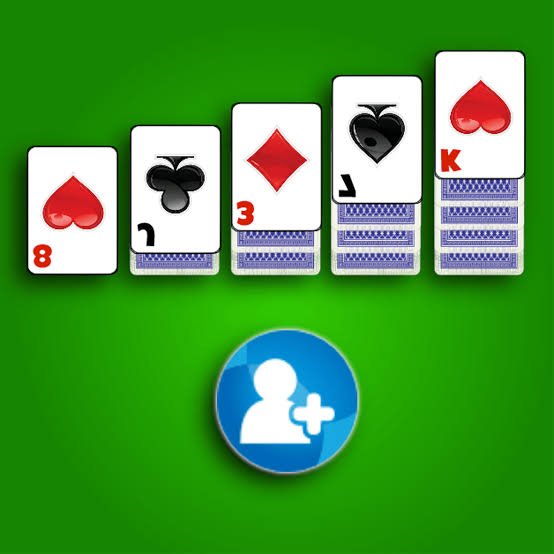
Solitaire Reverse is a single-player card game from DrMop Games that takes the familiar logic of solitaire and turns the direction of play around. Instead of following a standard Klondike-style build toward completed foundations, you work through cards by choosing one that is exactly one rank higher or lower than the current open card.
The rules took me less time to understand than the strategy. My early mistake was always playing the first valid card I saw. That can work for a few moves, but it often leaves a much better card trapped underneath. Looking at two possible moves before clicking makes a noticeable difference.
| Game Detail | Information |
|---|---|
| Game | Solitaire Reverse |
| Developer | DrMop Games |
| Genre | Card, Solitaire |
| Gameplay Style | Reverse solitaire, sequential card matching |
| Controls | Mouse click or touchscreen tap |
| Supported Devices | Desktop, Phone, Tablet |
| Earlier Browser Availability | April 2020 |
| Poki Release | August 2020 |
| Latest Listed Poki Update | November 2020 |
| Current Poki Rating | 3.8 |
| Current Poki Votes | 33K+ |
| Multiplayer | Single-player |
DrMop’s own development site confirms Solitaire Reverse as one of its HTML5 card games and specifically lists it for both desktop and mobile play.
How Solitaire Reverse Works
The main rule is simple.
Look at the open card near the bottom of the board and choose another available card that is exactly one rank higher or one rank lower.
For example, if the current card is a 7, a 6 or an 8 can be played.
That card then becomes the new reference for your next move.
The process continues as long as another legal card is available.
This sounds easy until several possible moves appear at once.
That is where planning becomes important.
Why It Feels Different From Normal Solitaire
Traditional Klondike solitaire uses seven tableau piles and builds foundations upward from aces through kings. Bicycle’s official Klondike rules describe that familiar structure, including alternating-color tableau sequences and suit-based foundations.
Solitaire Reverse does not simply reproduce those rules backward.
Its browser version uses a much more direct card-selection system where the current open card determines which rank can be played next.
This changes the question you ask yourself.
In normal solitaire, you may think about moving sequences and uncovering foundations.
Here, you are more often asking:
“What move gives me another move afterward?”
That makes it feel closer to a compact sequencing puzzle.
Solitaire Reverse Controls
The controls are deliberately minimal.
- Desktop: Move the cursor to a playable card and click it
- Phone: Tap the card you want to play
- Tablet: Tap the card you want to play
The current browser listing confirms mouse controls and support for desktop, phone, and tablet.
Modern web interfaces can handle mouse and touchscreen actions through common pointer systems. The MDN Pointer Events guide explains how browsers can recognize input from a mouse, finger, or stylus through a shared event model.
There is almost nothing mechanical to learn.
The difficulty is entirely in choosing the right card.
Do Not Automatically Play The First Valid Card
This was the biggest mistake I noticed.
Suppose the open card is a 9.
You can play either an 8 or a 10.
Both moves are legal.
But they may not be equally useful.
If playing the 8 reveals a 7 underneath, you may immediately continue.
If playing the 10 leaves no 9 or jack available afterward, the sequence may stop.
So before clicking, check whether each candidate creates another possible move.
That small habit can extend a run considerably.
Look Underneath Available Cards
The visible card is not always the most important card.
Sometimes the useful move is the one that uncovers something underneath.
When two legal choices are available, I try to consider which hidden or blocked card each move may reveal.
This is similar to one of the basic ideas behind traditional solitaire.
Bicycle’s general solitaire rules explain how freeing covered cards is an important part of progressing through a standard layout.
Solitaire Reverse changes the exact rules, but the planning lesson still applies.
A move should ideally improve the next position, not merely solve the current one.
Think In Small Sequences
Trying to calculate the entire board at once is unnecessary.
I found it more useful to look two or three moves ahead.
For example:
Current card: 7
Available choices:
6 → 5 → 4
or
8 → no useful follow-up
The first route is clearly stronger even though both starting moves are technically allowed.
Thinking in these short chains makes decision-making much easier.
You do not need to solve the whole board mentally.
You just need to avoid moves that obviously close the route too early.
What Happens When No Card Fits?
Eventually you may reach a point where none of the visible cards is one rank higher or lower than the current card.
At that point, the stock becomes important.
Drawing another card changes the active value and may create a fresh sequence of available moves.
That means stock cards should not be thought of only as emergency buttons.
They are limited opportunities to restart momentum.
If several good moves are still available on the board, use them before relying on another stock card.
Crowns And Themes
Solitaire Reverse includes crowns that can be used toward cosmetic themes and backgrounds.
The current game description specifically mentions spending earned crowns on new visual themes.
These do not change the basic card rules.
They give repeated games a small progression reward instead.
I would treat them as a bonus rather than changing how you approach a difficult board.
A different background cannot rescue a weak sequence.
Planning still matters most.
Card Rank Recognition Becomes Important
Because every move depends on numerical or face-card sequence, recognizing ranks quickly helps.
The familiar ordering is:
Ace, 2, 3, 4, 5, 6, 7, 8, 9, 10, Jack, Queen, King.
Traditional solitaire generally ranks cards from king down through ace when discussing descending sequences. Bicycle’s rules provide that standard rank structure and explain how a regular 52-card deck is organized for solitaire play.
After several rounds of Solitaire Reverse, you usually stop consciously thinking about simple relationships such as 8 connecting to 7 or 9.
That makes later decisions feel quicker.
Avoid Wasting Flexible Cards
Some cards give you more options than others.
A middle-value card such as a 7 can potentially connect to either a 6 or an 8.
If several copies or nearby sequences are visible, that flexibility can matter.
I try not to consume a useful connector immediately when another legal route is available.
This does not guarantee a win because the hidden layout still matters.
But it reduces the number of situations where you realize one move too late that you used the only card connecting two parts of the board.
Suits Matter Less Than Rank Here
Players coming from Klondike may instinctively look at suits and colors.
In traditional Klondike, alternating color and card order are central to tableau building.
Solitaire Reverse’s main browser rule is different.
You are primarily looking at rank.
That means recognizing the number or face-card relationship is generally more important than asking whether a card is a heart, diamond, club, or spade.
This took me a few rounds to stop overthinking.
When To Slow Down
There is no need to rush simply because a legal card is highlighted or obvious.
A better rhythm is:
See the current card.
Find every legal option.
Check which one creates another move.
Then click.
That adds only a second or two, but it often prevents a chain from ending prematurely.
Solitaire Reverse is much more forgiving when treated as a planning game rather than a reaction game.
Desktop Play
The desktop version uses a mouse cursor and click.
That makes it easy to scan the board before committing.
I find desktop useful when several cards are close together because the pointer makes individual selections very clear.
The game itself does not require keyboard controls.
That also means players unfamiliar with WASD-style games can begin immediately.
Playing Solitaire Reverse On Mobile
Solitaire Reverse also supports phone and tablet browsers.
Touch input works naturally because each move involves selecting a card rather than dragging a character or controlling movement.
The W3C Pointer Events specification provides the technical standard behind unified pointer input across devices such as touchscreens and mice.
On a smaller phone screen, I would take slightly more care when two playable cards are close together.
A wrong tap can turn a good planned sequence into a different move.
Who Created Solitaire Reverse?
Solitaire Reverse was created by DrMop Games.
This attribution is particularly well supported because DrMop’s own website lists Solitaire Reverse in its HTML5 game catalogue alongside several other solitaire titles.
DrMop also wrote in April 2020 that Solitaire Reverse had been deployed as one of its browser games.
Other DrMop card and puzzle games include:
- Solitaire Golf
- Australian Patience
- Tri Peaks
- Solitaire Match
- Wordsmith
- Wordy Pop
- Brain Dozer
This first-party confirmation is more useful than relying only on game portals for developer attribution.
Solitaire Reverse Release Date Explained
Two useful browser dates appear in the available records.
CrazyGames records an April 2020 browser publication for the DrMop version.
The current Poki listing records:
Poki release: August 2020
Latest Poki update: November 2020
So the clearest timeline is:
Earlier verified browser availability: April 2020
Poki platform release: August 2020
Latest listed Poki update: November 2020
This is more accurate than calling August 2020 the game’s first-ever release.
Solitaire Reverse Rating
The current Poki listing shows approximately:
3.8 from more than 33,000 votes.
Ratings can change as additional people vote.
For that reason, the number should be treated as a current platform snapshot rather than a permanent part of the game’s specification.
Is Solitaire Reverse Multiplayer?
Solitaire Reverse is a single-player card game.
There is no need to wait for another player or enter an online competitive lobby.
That makes it suitable for short sessions because you can start another board immediately after the previous one ends.
The main comparison is with your own decision-making rather than another player’s reaction speed.
Solitaire Reverse Vs Classic Solitaire
The biggest difference is the way progress is created.
Classic Klondike asks you to manage tableau piles, alternate colors, uncover hidden cards, and build four foundations by suit.
Solitaire Reverse makes the immediate decision smaller.
Find a card exactly one rank above or below the active card.
That smaller rule creates a different kind of puzzle.
Classic solitaire often requires managing several piles at the same time.
Solitaire Reverse is more focused on preserving a continuous numerical path.
Neither is necessarily harder.
They test slightly different habits.
Common Solitaire Reverse Mistakes
The first mistake is playing the first legal card without checking alternatives.
The second is focusing only on the current move.
The third is drawing from the stock while useful board moves remain.
Another mistake is carrying standard solitaire assumptions into this version and paying too much attention to suit or color.
The most useful correction is simple:
Before every important move, look for the next card too.
That one habit solves several of these problems at once.
A Better Way To Play
Start each board without worrying about speed.
When two choices appear, pause.
Check what each one reveals.
Prefer the route that appears to create a longer sequence.
Use the stock when the current chain genuinely stops.
After a few games, start paying attention to situations where you repeatedly get stuck.
You may notice that the problem is not the final move at all.
It often started two or three cards earlier.
That is when the game begins to feel much less random.
Related Categories
Solitaire Reverse fits naturally into:
- Card Games
- Solitaire Games
- Brain Games
- Board Games
- Puzzle Games
- Single-Player Games
The current platform primarily classifies it under Card Games, with solitaire, brain, and board categories also associated with it.
More Games From DrMop
DrMop has created several other card games that use familiar solitaire ideas differently.
Solitaire Golf uses a golf-solitaire structure.
Australian Patience offers a more demanding solitaire variation.
Tri Peaks uses a different exposed-card layout.
DrMop’s official HTML5 catalogue lists these games alongside Solitaire Reverse, providing a useful way to confirm that they come from the same developer.
What Makes Solitaire Reverse Different?
Solitaire Reverse takes a familiar card-game idea and reduces each turn to one small question:
What card keeps the sequence alive?
That simplicity is deceptive.
The obvious move is not always the useful move, and a decision that works now can leave you with nothing playable immediately afterward.
For me, that is where the game becomes interesting.
You stop clicking cards simply because they are legal and start considering what position each choice leaves behind.
The controls never become complicated.
Your decisions do.

Reviews
There are no reviews yet.