

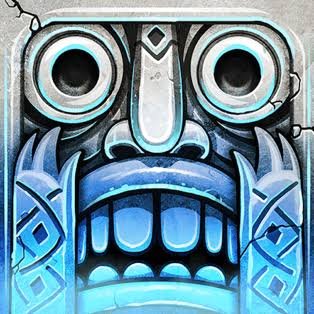
Temple Run 2 Frozen Shadows takes the familiar endless-running formula into a much colder environment filled with icy caves, frozen paths, narrow ledges and downhill sections. Your character keeps moving automatically while you decide when to turn, jump, slide or shift position to stay ahead of the pursuing Demon Monkey.
The biggest adjustment for me was learning not to react to every obstacle the instant I noticed it. Early inputs can be just as damaging as late ones. Once I started waiting until the runner was properly lined up with a gap or turn, my runs became noticeably more consistent.
| Game Detail | Information |
|---|---|
| Game | Temple Run 2 Frozen Shadows |
| Developer | Imangi Studios |
| Genre | Endless Runner / Skill |
| Gameplay Style | Automatic running, obstacle avoidance and score progression |
| Controls | A/D or Left/Right, W/Up, S/Down |
| Mobile Controls | Swipe left/right, up and down |
| Browser Release | June 2021 |
| Latest Verified Browser Update | June 2021 |
| Current Browser Rating | 4.2 |
| Browser Votes | 380K+ |
| Multiplayer | Single-player |
| Main Environment | Frozen Shadows |
The browser listing identifies Imangi Studios as the developer and dates this edition to June 2021.
What Changes In Frozen Shadows?
Frozen Shadows is not a completely separate Temple Run sequel.
It is a themed environment built around the Temple Run 2 system, replacing the more familiar jungle-style surroundings with an icy setting.
The map introduces visual and mechanical changes such as:
- frozen caves
- narrow icy ledges
- slippery-looking paths
- deep gaps
- frozen arches
- downhill ice sections
- familiar Temple Run obstacles in a winter setting
The current Temple Run 2 mobile listing also specifically mentions snowy mountains and icy downhill movement as part of the game’s wider collection of environments.
What surprised me is that the cold setting changes how the same basic controls feel. A narrow frozen ledge makes a simple lane change feel more important than it would on a wide section of ordinary path.
The Run Starts Immediately
Temple Run 2 Frozen Shadows does not spend much time explaining itself once a run begins.
Your character moves automatically, and the player is responsible for reacting to the path.
The core loop is straightforward:
run → avoid obstacles → collect coins → use power-ups → survive longer → improve your score
There is no traditional finish line.
The run continues until you hit a major obstacle, miss part of the path or get caught by the pursuing creature.
That endless structure makes improvement easy to measure because you can compare each attempt with your previous distance or score.
Frozen Shadows Controls
The browser controls are simple:
- A or Left Arrow: Move left
- D or Right Arrow: Move right
- W or Up Arrow: Jump
- S or Down Arrow: Slide
On touchscreen devices, the equivalent controls use swipes:
- Swipe left/right: Move or turn
- Swipe up: Jump
- Swipe down: Slide
These inputs are confirmed on the current browser listing.
The MDN KeyboardEvent documentation gives useful technical background on how browsers recognize keyboard input such as arrow keys.
For touch and pointer interaction, the W3C Pointer Events specification explains the web standard used to support different input devices.
Jumping Is Mostly About Timing
Jumping looks like the simplest action, but it caused many of my early failures.
The temptation is to press jump as soon as a gap becomes visible.
That can put the character back on the ground before the obstacle has been fully cleared.
Waiting too long creates the opposite problem.
I found it more useful to judge the beginning of the obstacle rather than staring at the far edge. Once I became familiar with the runner’s jump distance, I stopped making as many rushed inputs.
The browser guidance also recommends timing jumps carefully around edges and double-obstacle situations.
Sliding Under Frozen Obstacles
Sliding is used when jumping would put the runner directly into an overhead obstacle.
Pressing S or the Down Arrow triggers the movement on desktop.
What makes sliding slightly tricky is that the correct response can look similar to jumping for the first fraction of a second.
I initially relied too heavily on obstacle colour and appearance. Eventually, shape became more useful.
If the safe route is visibly underneath an object, prepare to slide. If the danger sits along the ground, jumping is usually the better choice.
That simple distinction becomes increasingly important as the game speeds up.
Ice Sections Change The Rhythm
Frozen Shadows includes icy movement that makes the environment feel different from the normal Temple Run 2 course.
The icy downhill sections are not simply decorative backgrounds. They change the visual rhythm and force you to read upcoming hazards while the environment moves quickly around you.
Imangi’s current Google Play description specifically references surfing down an icy mountain as one of Temple Run 2’s movement sequences.
I found these sections easier once I stopped making unnecessary corrections.
When the correct route is already lined up, additional movement can introduce a mistake that did not need to happen.
Coins Give Each Run A Second Goal
Survival is the immediate objective, but coins give you something else to think about.
Coins appear along the route and can contribute to upgrades and progression.
This creates an interesting decision.
Sometimes the safest route and the richest coin line are not identical.
Early on, I tried collecting nearly everything I saw. That regularly placed me in poor positions immediately before obstacles.
Now I treat coin collection as secondary when the path becomes crowded. Missing a few coins is much less costly than ending an otherwise strong run.
The Power Meter
Collecting coins also contributes to the power system.
When the power meter fills, the game can provide temporary advantages depending on the ability setup.
Temple Run 2 includes familiar power-up concepts such as:
- Coin Magnet
- Shield
- Boost
The current official Google Play listing continues to describe shields, coin magnets and speed boosts as core Temple Run 2 power-ups.
I find the shield most useful when the run has already become fast enough that one small mistake could otherwise end a good attempt.
A boost is different. It changes your movement pace, so I prefer activating speed-related abilities only when I am already comfortable reading the course.
Abilities And Upgrades
Progress does not reset completely when a run ends.
Coins can be used toward abilities that improve future attempts.
That gives Temple Run 2 more long-term structure than a game based only on chasing a high score.
You gradually improve areas such as:
- shield effectiveness
- magnet usefulness
- boost performance
- power-up duration
- general running advantages
I would avoid spending everything without understanding which problem actually ends most of your runs.
If you frequently miss coins, Magnet improvements may help.
If one collision normally ends a strong attempt, defensive upgrades may provide more practical value.
That small amount of self-observation makes the upgrade system feel much less random.
The Demon Monkey Still Matters
Frozen Shadows changes the environment, but the familiar pursuit remains.
The Demon Monkey follows behind the runner after the idol is taken.
It gives the endless run a reason beyond simply collecting coins.
You are always escaping something.
The creature also provides immediate feedback after certain mistakes because poor movement can reduce your distance from the pursuer.
Imangi continues to describe escaping the Demon Monkey as a central part of Temple Run 2.
There Is No Final Finish Line
Temple Run 2 Frozen Shadows is an endless runner.
That means there is no conventional last level where you permanently complete the game.
Instead, a run continues for as long as you can keep the character moving safely.
The browser edition confirms that the run ends after a serious collision, a fall or being overtaken.
That structure changes what “progress” means.
For me, improvement is easier to notice through:
- longer distance
- higher score
- cleaner obstacle sequences
- more coins collected
- completed objectives
- stronger abilities
A run ending does not necessarily mean you failed to progress.
Stage Objectives Give Runs More Direction
Temple Run 2 uses objectives to give players smaller targets beyond surviving indefinitely.
These can encourage you to concentrate on particular actions or achievements during a run.
I like objectives because high-score chasing alone can become repetitive.
A specific goal gives me a reason to alter how I play instead of repeating exactly the same strategy every time.
The browser edition specifically references completing stage objectives as part of progression.
When The Game Gets Faster
The longer you survive, the less time you have to read the path.
This is where Frozen Shadows changes from a simple reaction game into something that rewards anticipation.
I noticed that my worst late-run mistake was staring at the character.
The runner’s position already tells you where you are. Looking slightly farther along the path gives more time to identify the next obstacle.
That small change made a bigger difference than trying to physically press the keys faster.
Who Created Temple Run 2 Frozen Shadows?
Temple Run 2 Frozen Shadows was created by Imangi Studios.
Imangi Studios is also the developer behind the original Temple Run and Temple Run 2.
Google Play currently lists Imangi Studios LLC as the developer of Temple Run 2, and the game has surpassed 1 billion Android downloads, demonstrating how large the series became after its mobile launch.
The original Temple Run also remains available from the same developer, with more than 500 million Android downloads currently shown on Google Play.
That developer history makes Frozen Shadows easier to understand. It is an extension of a long-running series rather than an unrelated game borrowing the Temple Run name.
Frozen Shadows Release History
The current standalone browser version of Temple Run 2 Frozen Shadows dates to June 2021.
The browser listing also gives June 2021 as its latest verified update.
However, that should not be confused with the broader Temple Run 2 mobile app.
The mobile game continues receiving new updates years later.
For example, Apple’s update history shows Frozen Shadows returning as part of Temple Run 2’s winter content in early 2025.
Google Play shows the main Temple Run 2 app receiving further updates in August 2026.
So there are two separate dates worth remembering:
Browser Frozen Shadows edition: June 2021
Main Temple Run 2 app: still actively updated in 2026
How Frozen Shadows Compares With Standard Temple Run 2
The fundamental running system is largely familiar.
Both versions revolve around:
- automatic forward movement
- turns
- jumps
- slides
- coin collection
- power-ups
- increasing speed
- endless survival
The biggest difference is the environment and the obstacle presentation.
Standard Temple Run 2 commonly uses ruins, cliffs, forest paths and mines.
Frozen Shadows shifts that experience toward an icy world with frozen caves, narrow ravines and slippery-looking pathways.
I would choose standard Temple Run 2 first if you want the classic environment.
Frozen Shadows makes more sense if you already understand the controls and want a visually different course without learning an entirely new game.
Frozen Shadows Versus Other Temple Run 2 Maps
Temple Run 2 has received several themed environments.
Browser versions currently include maps such as:
- Frozen Shadows
- Holi Festival
- Jungle Fall
- Spooky Summit
Each retains the same basic endless-running framework but changes the environment and some of the hazards.
For example, Holi Festival gives the game a colourful festival theme, while Jungle Fall moves the runner through a dense jungle environment.
This map-based approach lets players change scenery without abandoning familiar controls.
Desktop And Mobile Play
The current Frozen Shadows browser listing identifies the edition primarily with desktop controls, while Temple Run 2 itself is also designed around touchscreen swipes on mobile platforms.
I prefer keyboard controls when runs become fast because individual directions feel very deliberate.
Touch controls feel more natural if you already know Temple Run from a phone.
Neither automatically makes the game easier.
The important difference is whether you are more comfortable with key presses or directional swipes.
Browser Performance
Temple Run 2 Frozen Shadows depends on quick input, so inconsistent browser performance can become noticeable.
If the game suddenly feels less responsive, I usually check browser performance before assuming the controls have changed.
Google’s web.dev performance guidance explains how responsiveness, rendering and page workload can influence interactive web experiences.
Closing unusually heavy tabs can sometimes help on systems with limited memory.
Full-screen play may also make obstacles easier to read because the path occupies more of the display.
Mistakes I Would Avoid
My most common early mistake was overcorrecting.
A small movement was enough, but I would press again because I was not sure the first input had registered.
That often moved the character straight into the next obstacle.
Another mistake was chasing coin lines that crossed into unsafe positions.
The third was jumping too early simply because an obstacle had become visible.
All three improved once I concentrated on the route rather than trying to maximize every action.
What Makes Frozen Shadows Different?
Temple Run 2 Frozen Shadows keeps the original game’s simple control system while giving it a noticeably different atmosphere.
Its main characteristics are:
- icy environments
- automatic endless running
- narrow frozen paths
- jumps and slides
- demon-monkey pursuit
- coin collection
- power-ups
- abilities
- stage objectives
- increasing speed
The rules are easy to learn, but maintaining clean timing becomes progressively harder as the run accelerates.
That is where most of the game’s challenge comes from.
More Running Games On Mopoga
Temple Run 2 Frozen Shadows belongs naturally with Mopoga’s running, platform and skill-focused games.
Dreadhead Parkour is a useful comparison for players who like timing jumps and avoiding obstacles, while Parkour Race puts more emphasis on competitive movement.
The standard Temple Run 2 and Temple Run 2 Holi Festival are even closer alternatives because they share the same core Imangi running system with different environments.
I have not guessed Mopoga product links where the exact sitemap URL could not be confirmed. The canonical internal URLs should continue to come directly from Mopoga’s:
https://imopoga.com/product-sitemap.xml
and
https://imopoga.com/product_cat-sitemap.xml
This avoids creating broken internal links simply to satisfy a link count.
About Temple Run 2 Frozen Shadows
Temple Run 2 Frozen Shadows takes an established endless-runner system and gives it a convincing winter identity.
You still turn, jump, slide, gather coins and stay ahead of the Demon Monkey, but the frozen caves and icy downhill sections make familiar actions feel different.
For me, the game became much easier when I stopped trying to react faster and started reading the path earlier.
That is the main skill behind a long run.



Reviews
There are no reviews yet.