

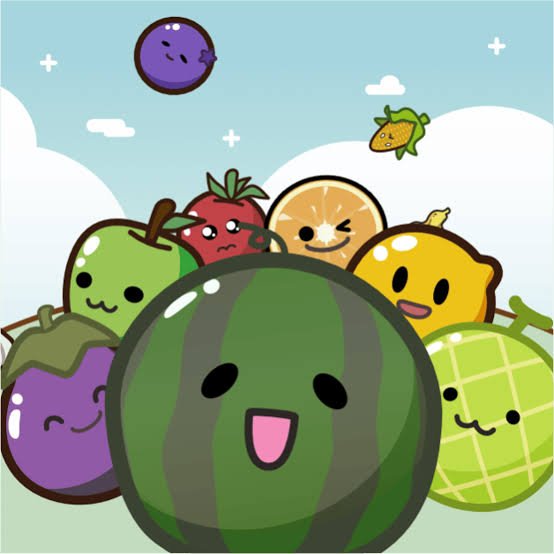
Watermelon Drop is a physics-based merge puzzle game where you drop fruits and vegetables into a container and combine matching items into larger ones. Two identical pieces touching each other create the next item in the chain, while every new drop takes up more of the limited space inside the cup.
The first mistake I made was aiming every fruit directly at its matching partner. That works early, but it can leave large pieces scattered across the container. My runs improved when I started thinking about where the new merged item would end up, not just whether the current drop could make a match.
| Game Detail | Information |
|---|---|
| Game | Watermelon Drop |
| Developer | yeqwep |
| Genre | Skill / Merge Puzzle |
| Gameplay Style | Physics-based fruit dropping and merging |
| Main Objective | Merge matching items while keeping the container below the top |
| Controls | Move with mouse or touch, click or tap to drop |
| Supported Devices | Desktop, Phone, Tablet |
| Browser Release | December 2023 |
| Latest Verified Update | January 2024 |
| Current Rating | About 4.5 |
| Current Votes | 665K+ |
| Multiplayer | Single-player |
| Score Goal | Build larger items and aim for an A rank |
The Container Is Your Real Limitation
Watermelon Drop gives you one main problem: space.
Every fruit or vegetable you release stays inside the container unless it merges into something larger.
That creates the main loop:
aim → drop → collide → merge → create space → repeat
The current game description says the run ends when the container becomes too full and an item crosses over the edge.
That means a successful move should ideally do two things.
It should create a useful merge now and leave enough room for later pieces.
How To Play Watermelon Drop
The controls are very simple.
Desktop
- Move the fruit or vegetable left or right with the mouse.
- Click to release it into the container.
Phone And Tablet
- Drag or position the item with touch controls.
- Tap or release it where you want it to fall.
The current browser listing officially supports desktop, phone, and tablet.
For technical background, the MDN Pointer Events documentation explains how browsers can handle mouse and touchscreen input through a shared event model.
Matching Items Creates Larger Ones
Watermelon Drop follows the familiar Suika-style merge rule.
When two identical fruits or vegetables touch, they combine into a larger item.
That means every successful merge changes the layout.
Two small pieces disappear.
One bigger piece replaces them.
The useful question is not only:
Can these two pieces merge?
It is:
Where will the new larger piece settle afterward?
That second question becomes much more important once the container starts filling.
Build Larger Items Without Blocking Yourself
Large fruits are the goal, but they also take up more room.
If several large pieces become trapped in different corners, smaller items may have nowhere useful to go.
I prefer keeping large pieces reasonably close when possible.
That makes future matching easier and leaves more flexible space elsewhere.
A big fruit sitting alone against one wall can become surprisingly awkward if its matching partner appears on the opposite side.
Do Not Split Matching Pairs Too Far Apart
The easiest layout to manage is one where related pieces stay within reach of each other.
If two matching items are already near one another, I usually avoid dropping unrelated pieces between them.
That keeps the merge route open.
I found this especially useful once medium and large fruits appeared because moving them later is much harder than moving the small starting pieces.
Gravity Can Help Or Ruin A Good Drop
The game uses physics.
Items can:
- bounce
- roll
- shift
- push another fruit
- trigger unexpected merges
That means a drop does not always finish exactly where you aimed.
This is part of what makes Watermelon Drop more interesting than a fixed-grid merge puzzle.
You choose the starting position.
Gravity and collisions decide part of what happens next.
Wait For The Board To Settle
One practical habit helped me a lot:
Do not rush the next drop.
After a collision or merge, give the fruits a moment to stop moving.
A cluster that looks stable may still roll into another position.
Sometimes that movement even creates an extra merge.
Waiting briefly gives you a much more accurate picture of where the available space really is.
Keep The Center Flexible
I found the middle of the container useful as working space.
If the center becomes completely packed, new pieces have fewer places to move after landing.
That can make every later drop feel forced.
I prefer using the sides for more established groups while leaving some central space for new items to fall and roll.
This is not a strict rule, but it made my layouts easier to recover.
Do Not Stack Too High On One Side
A tall pile near the edge is dangerous.
Even if the opposite half of the container is mostly empty, one badly placed fruit can push the tall stack over the limit.
I try to keep the overall height reasonably balanced.
If one side becomes too tall, the next few drops should usually help the lower side rather than adding more weight to the crowded area.
Watch The Next Item When Available
Some versions of this style of game show the upcoming piece.
When that information is available, it should influence your current drop.
For example, if the next item matches something already on the left, you may want to preserve that route rather than blocking it now.
Thinking one piece ahead can prevent a lot of unnecessary clutter.
Do Not Force A Risky Merge
A matching fruit may be visible, but reaching it can still be a bad idea.
Dropping another item into a crowded gap can push several nearby fruits upward.
Sometimes the safer move is to place the fruit somewhere open and wait for another match later.
I found that preserving space usually mattered more than completing every available merge immediately.
Small Fruits Need Their Own Space
Tiny starting items are easy to underestimate.
Because they are small, it feels harmless to scatter them anywhere.
The problem comes later when several different small pieces become trapped between large fruits.
They can fill awkward gaps without having matching partners nearby.
I prefer keeping at least one area where smaller items can collect and merge without getting buried.
Chain Reactions Can Clear Space Quickly
One merge can cause another.
For example:
- Two matching small pieces combine.
- The larger result falls.
- It touches another matching item.
- A second merge happens.
Those chain reactions can free a surprising amount of space.
I would not rely on them blindly, but arranging related pieces close together gives you a better chance of triggering useful multi-step merges.
Score And A-Rank Runs
Watermelon Drop gives your final score a rating, and the browser description challenges players to reach an A rank.
That gives repeated runs a clearer goal than simply surviving longer.
A strong score usually comes from:
- creating larger fruits
- maintaining usable space
- triggering efficient merges
- avoiding early overflow
I would focus on board control first.
Higher scores usually follow naturally once the container stays organized for longer.
Phone Play Works Naturally
Watermelon Drop officially supports phones.
The basic interaction suits touchscreen play well because you only need to position and release each item.
The main difficulty is screen size.
When the container gets crowded, small gaps can be harder to judge accurately.
I would slow down near the end of a run instead of making quick drops.
Tablet Gives You More Room To Judge Gaps
Tablet play keeps the direct touch controls but gives you a larger view of the container.
That can make it easier to see:
- small open spaces
- matching pairs
- crowded edges
- unstable piles
The rules remain the same.
You simply have more visual room for planning.
Desktop Gives Precise Placement
Mouse control can make narrow placements easier.
That becomes useful when you need to drop a small fruit between two larger ones.
The W3C Pointer Events specification provides the current standard for hardware-independent pointing input across devices such as mouse, touch, and pen.
From a player’s perspective, desktop and mobile use the same basic idea: position the item carefully and release it.
Who Created Watermelon Drop?
Watermelon Drop was created by yeqwep.
The same developer is also associated with Cats Drop, another browser title built around dropping and merging objects.
That developer connection makes sense because both games use simple placement controls and physics-driven merging.
Release And Latest Update
The current verified browser timeline is:
Release: December 2023
Latest Update: January 2024
For Mopoga, I would keep both dates separate.
The December date records the browser release, while January 2024 is the latest currently listed update.
Current Watermelon Drop Rating
The current browser listing shows approximately:
4.5 from more than 665,000 votes.
That total keeps changing as more people rate the game.
For an evergreen Mopoga table, 665K+ votes is cleaner than treating one exact count as permanent.
Is Watermelon Drop Multiplayer?
Watermelon Drop is a single-player merge puzzle.
The current browser listing does not show local multiplayer or online matchmaking.
The challenge comes from managing your own container, improving your score, and building increasingly large fruits without overflowing the top.
Common Watermelon Drop Mistakes
The first mistake is dropping every fruit directly onto the nearest match.
The second is allowing large pieces to spread across opposite sides of the container.
Another problem is building one side much higher than the other.
I also found that dropping the next item before the previous collision had settled made the board harder to read.
Finally, do not fill every small gap simply because it is open.
Sometimes keeping that space available gives you a much better future merge.
A Better Watermelon Drop Routine
This approach worked better for me:
- Check the current fruit.
- Look for an easy matching partner.
- Check where the merged item would probably settle.
- Compare the height on both sides.
- Keep useful gaps open.
- Drop carefully.
- Wait for movement to stop.
- Look for chain reactions.
- Plan the next drop from the new layout.
The important part is repeating the full-board check after every move.
More Puzzle Games On Mopoga
If you enjoy merge puzzles but want moving celestial objects instead of fruit, Planet Merge uses gravity and collisions to combine matching planets into larger worlds.
For a more structured spatial puzzle, Lines to Fill asks you to drag colored paths through shaped boards until every available space is covered.
You can also try Bad Ice-Cream 2 for a very different fruit-based puzzle game. Instead of merging fruit, you collect it inside maze-like levels while creating and breaking ice barriers.
Watermelon Drop Compared With Grid Merge Games
Traditional merge games often use fixed squares.
Watermelon Drop does not.
The fruits can roll and shift after landing.
That means two identical items can begin close together and still separate.
A later collision may push them back into contact.
This physics-based movement makes the board feel less predictable than a standard tile-merging puzzle.
What Makes Watermelon Drop Different?
Watermelon Drop combines three simple systems:
matching
gravity
limited space
The merge rule is easy.
The difficulty comes from controlling where those merges happen.
For me, the biggest improvement came when I stopped chasing every immediate match and started protecting the shape of the whole container.
A slower safe drop often creates a much better board than one fast merge that leaves two large pieces blocking everything else.
Related Categories
Watermelon Drop fits naturally into:
- Merge Games
- Watermelon Games
- Skill Games
- Puzzle Games
- Food Games
- Physics Games
- Casual Games
- Mobile Games
- Single-Player Games
The current browser listing primarily classifies it under Skill Games, while also associating it with merge, watermelon, puzzle, food, and relaxing-game categories.
About Watermelon Drop
Watermelon Drop is a Suika-style merge game from yeqwep where fruits and vegetables fall into a container and matching pieces combine into larger items.
Move each piece into position, release it, let gravity settle the board, and keep merging without letting the pile cross the top edge.
The browser version supports desktop, phone, and tablet with simple mouse or touchscreen controls.
The rules are easy to learn, but longer runs depend on keeping large items organized and preserving enough room for whatever falls next.
Reviews
There are no reviews yet.