

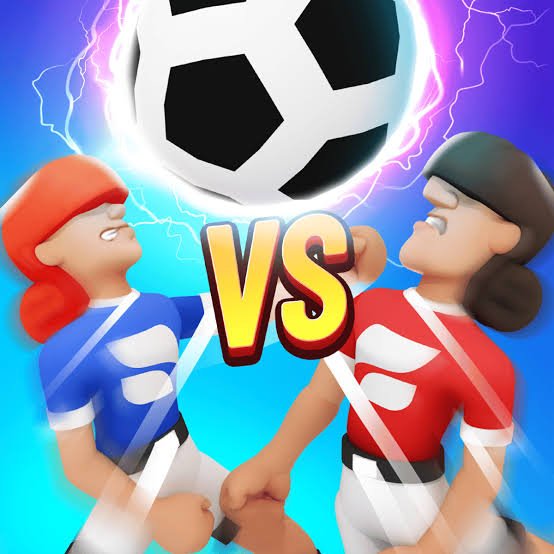
Ragdoll Soccer is a physics-based football game where controlling your player is deliberately less precise than in a traditional soccer title. You move a floppy character across the pitch, jump, collide with the ball, and try to force it into the opponent’s goal. The strange movement is not something you eliminate completely. Learning to work with it is the game. My first mistake was holding a direction constantly and hoping the player would eventually reach the ball. Shorter movements followed by a well-timed jump gave me much more control.
| Game Detail | Information |
|---|---|
| Game | Ragdoll Soccer |
| Developer | 99 Top Games |
| Genre | Sports, Soccer |
| Gameplay Style | Physics-based football matches |
| Controls | A/D, W and Arrow Keys |
| Supported Devices | Desktop, phone and tablet |
| Release Date | March 2025 |
| Latest Verified Update | August 2026 |
| Current Verified Rating | 4.3 |
| Current Verified Votes | 60K+ |
| Main Modes | Single-player and local 2-player |
| Multiplayer | Local multiplayer |
| Main Objective | Score more goals than your opponent |
Getting Comfortable With The Ragdoll Movement
Ragdoll Soccer does not give you the tight movement found in a normal football game.
Your character bends, falls and rebounds according to the game’s exaggerated physics. A movement that looks perfectly lined up can still produce an awkward collision with the ball.
That unpredictability is intentional.
Instead of trying to position the player’s foot perfectly, I found it more useful to position the whole character near the expected path of the ball.
Once you accept that some collisions will be messy, the game becomes easier to read.
How To Play Ragdoll Soccer
The single-player control scheme is compact.
One Player
- A: Move left
- D: Move right
- W: Jump
- W twice: Double jump
Two Players
Player 1
- A / D: Move
- W: Jump
Player 2
- Left / Right Arrow Keys: Move
- Up Arrow: Jump
The current version supports both solo play and local competition on the same device.
Browsers process keyboard input through standardized events. The MDN KeyboardEvent documentation gives useful technical background on how web games recognize keys such as W, A, D and the Arrow Keys.
The Double Jump Changes Your Options
Pressing W twice gives the single-player character a double jump.
This is more useful than repeatedly jumping without a plan.
A second jump can help you change height after the first movement has already begun, which gives you another chance to meet a ball that is travelling above the character.
My mistake was using the double jump automatically.
That often left me airborne when the ball dropped underneath.
I now save the second jump for situations where the ball’s path actually requires the extra height.
Getting Behind The Ball
Running directly toward the ball is not always the best move.
If your player reaches it from the wrong side, the collision may send the ball back toward your own goal.
Position matters.
When there is enough time, I try to move behind the direction I want the ball to travel before making contact.
The ragdoll physics still introduce uncertainty, but at least the player’s momentum is helping rather than working against the intended direction.
Let The Ball Come To You Sometimes
Ragdoll Soccer looks frantic, so standing in roughly the right place can feel like doing nothing.
But chasing the ball constantly often creates worse positioning.
If the ball is already travelling toward your half, waiting closer to where it will land can be more effective than running all the way across the pitch.
This became especially useful after rebounds.
The ball can change direction quickly, while the ragdoll character takes time to recover from an awkward fall.
Watching first and moving second can save a lot of unnecessary scrambling.
Single-Player Matches
Single-player mode lets you learn the movement without another person sharing the keyboard.
It is the better place to understand:
- basic movement,
- normal jumps,
- double jumps,
- rebounds,
- and how strongly different collisions affect the ball.
I would use the first few matches to learn how the character recovers after falling rather than worrying entirely about the score.
Once recovery starts feeling familiar, attacking becomes much easier.
Local Two-Player Matches
The local 2-player mode is where the game’s unpredictable physics become especially noticeable.
Two people compete on the same device, with separate keyboard controls.
Because both characters can collide with the same ball and each other, a carefully planned move can quickly become chaotic.
That unpredictability keeps matches from feeling too mechanical.
The best advantage is usually not memorizing a complicated technique. It is recovering more quickly when an unexpected bounce happens.
Why Jump Timing Matters
Jumping too early was one of the easiest ways for me to lose control of a play.
If the character is already descending when the ball arrives, the collision can send it in a completely different direction than expected.
Waiting slightly longer often produces a cleaner contact.
The useful question is not:
Can I jump now?
It is:
Where will the ball be when my character reaches the top of the jump?
Thinking in those terms makes the timing much more deliberate.
Goals Come From Messy Situations Too
Not every successful goal looks carefully planned.
Ragdoll Soccer regularly creates strange rebounds, accidental deflections and awkward-looking contacts.
That is part of the game’s character.
I would not immediately abandon a play because the first touch went badly.
A loose ball near the opponent’s goal can still become a scoring opportunity if your character recovers before the defender.
The same applies defensively.
An ugly clearance is still useful if it moves the ball away from danger.
Defending Your Goal
Defending is mostly about staying between the ball and your own goal.
Running straight toward every attack can leave open space behind you.
I had better results when I stopped a little closer to the goal and watched whether the ball was actually coming into a dangerous area.
Because the physics can send the ball upward or create unexpected rebounds, leaving yourself room to react is valuable.
Official football uses much more detailed rules around goals, field markings and match play. The IFAB Laws of the Game explain the regulations used in real association football.
Ragdoll Soccer simplifies all of that into short arcade matches.
Recovering After A Fall
Falling is normal.
Trying to prevent your ragdoll character from ever losing balance is unrealistic within the game’s physics system.
The useful skill is recovering without making the situation worse.
I usually avoid immediately pressing every movement key after a fall.
First I check which direction the character is facing and where the ball has moved.
Then I choose the next movement.
That small pause prevents one awkward collision from turning into several seconds of random movement.
Playing On Phone And Tablet
The current listing supports:
- Desktop
- Phone
- Tablet
The keyboard layout is specifically documented for desktop, while supported touch devices adapt the interaction for their interface.
The W3C Pointer Events standard explains how browser applications can handle touchscreen, mouse and pen input through a common pointer model.
For local two-player matches, however, a desktop setup is likely the clearer choice because the documented player controls are divided across one keyboard.
Why Physics Make Every Match Different
A conventional football game tries to give the player predictable control over passing and shooting.
Ragdoll Soccer deliberately loosens that control.
Your movement, jump timing, ball position and collisions all interact.
That means the same input does not necessarily create a perfectly identical result every time.
This is not realistic football simulation.
It is an arcade interpretation where physical unpredictability is part of the challenge and much of the humor.
Who Created Ragdoll Soccer?
Ragdoll Soccer was created by 99 Top Games.
The current browser listing identifies this as the developer’s first game released on that platform.
That makes it difficult to build a large verified same-developer catalogue at the moment, so I would avoid attaching unrelated ragdoll games to 99 Top Games simply because they use a similar visual style.
Developer attribution and genre similarity are not the same thing.
Release And Latest Update
The current verified browser dates are:
Release Date: March 2025
Latest Update: August 2026
The current listing also shows a rating of approximately 4.3 from more than 60,000 votes.
These platform ratings and vote totals can continue changing, so they are best treated as current information rather than permanent game statistics.
Real Soccer And Ragdoll Soccer Are Very Different
Ragdoll Soccer uses football’s basic idea of putting the ball into the opposing goal, but little else should be treated as realistic sports simulation.
Real football depends on rules governing:
- fouls,
- offside,
- restarts,
- player positions,
- match duration,
- and legal contact.
FIFA provides broader information about association football and its competitions, while IFAB maintains the official Laws of the Game.
Ragdoll Soccer intentionally removes most of that complexity so the focus stays on short physics-based matches.
Common Ragdoll Soccer Mistakes
The first mistake is holding a movement key continuously.
Another is jumping whenever the ball leaves the ground.
I also found that chasing every rebound pulled my character into poor positions.
A fourth mistake is using the double jump without checking the ball’s height.
Finally, do not expect every touch to be clean.
Trying to correct every awkward collision instantly often creates an even worse position.
The game becomes much easier once you respond to what actually happened rather than what you expected to happen.
A Better Match Routine
My approach is fairly simple.
At kickoff, I avoid immediately overcommitting.
I watch the first bounce and decide which side of the ball I need to reach.
When the ball rises, I judge whether a normal jump is enough before using a double jump.
After making contact, I look at where the ball went before moving again.
If possession becomes messy, I prioritize getting between the ball and my own goal.
That routine does not remove the unpredictable physics, but it gives me a better starting position when the next strange bounce happens.
Ragdoll Soccer Or A Traditional Football Game?
The choice depends on what kind of control you want.
Ragdoll Soccer is better suited to someone looking for:
- quick matches,
- physics-based movement,
- local 2-player competition,
- simple controls,
- unpredictable rebounds,
- and a humorous sports style.
A traditional football simulation is the better choice if you want formations, passing systems, player statistics and realistic match rules.
Ragdoll Soccer is not trying to replace that experience.
Its appeal comes specifically from being less predictable.
Related Game Categories
Ragdoll Soccer fits naturally into:
- Soccer Games
- Football Games
- Sports Games
- Ragdoll Games
- Physics Games
- 2 Player Games
- Multiplayer Games
- Skill Games
Its strongest identity is a physics-based soccer game with both solo and local two-player play.
About Ragdoll Soccer
Ragdoll Soccer takes football’s simplest objective and combines it with deliberately unstable character physics.
You move, jump, double jump and try to guide the ball into the opposing goal while recovering from awkward falls and unpredictable rebounds.
Single-player gives you room to learn how the ragdoll movement behaves, while local two-player matches make the same mechanics much more chaotic.
The biggest improvement in my own play came from moving less. Once I stopped chasing every ball immediately and started positioning the character where the next bounce was likely to go, scoring and defending both became easier to manage.


Reviews
There are no reviews yet.