

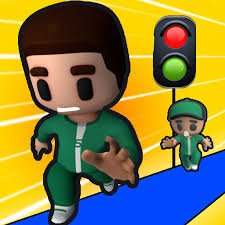
Sprint League 2 is a running and progression game by OnRush Studio where you train your character, improve stamina and speed, compete against increasingly stronger runners, earn coins, unlock better equipment, and work your way toward higher leagues.
The game originally centers on a very simple idea: train on treadmills until your runner becomes strong enough to compete. Over time, however, Sprint League 2has grown into a much larger browser game with extra modes such as Red Light Green Light, Tung Tung Tag, Brainrot Tsunami, and Backrooms.
What helped me most was treating training and racing as two separate parts of the same progression system. Training improves what your runner can do, while races show whether those improvements are enough to reach the next stage.
| Game Detail | Information |
|---|---|
| Game | Sprint League |
| Developer | OnRush Studio |
| Genre | Sports / Running |
| Gameplay Style | Training, racing and character progression |
| Main Objective | Improve your runner and climb through higher leagues |
| Training | Treadmills and stamina progression |
| Rewards | Coins, shoes, skins and upgrades |
| Extra Modes | Red Light Green Light, Tung Tung Tag, Brainrot Tsunami, Backrooms |
| Controls | WASD, Arrow Keys or Joystick |
| Supported Devices | Desktop, Phone, Tablet |
| Browser Release | November 2024 |
| Latest Verified Update | September 2026 |
| Current Rating | About 4.2 |
| Current Votes | 539K+ |
| Multiplayer Elements | Competitive shared-world and special modes |
Start On The Basic Treadmill
Sprint League begins with training.
Your runner starts on a basic treadmill where you collect progression points.
Those points help unlock better and faster training equipment.
The basic progression loop is:
train → improve → race → earn coins → upgrade → train again
That structure is easy to understand from the first few minutes.
The interesting part is deciding when your runner is ready to stop training and enter another competition.
Better Treadmills Improve Progress
The first treadmill is only the beginning.
As you collect enough points, stronger machines become available.
These improved treadmills help your runner progress faster.
This creates a useful upgrade cycle.
A better treadmill improves training.
Better training improves your runner.
A stronger runner performs better in races.
Race rewards then help unlock more improvements.
Each part feeds into the next.
Sprint League Controls
The current official browser controls are simple.
Desktop
Use either:
- WASD
- Arrow Keys
to move your character.
Phone And Tablet
Use the on-screen joystick.
Poki officially lists Sprint League as playable on desktop, phone, and tablet.
There is no large control list to memorize in the standard game.
Most of the challenge comes from movement, training choices, and adapting to the current mode.
Pick One Keyboard Layout And Stick With It
Desktop players can use either WASD or the arrow keys.
If you already play 3D browser games, WASD will probably feel familiar.
I would choose one layout and keep using it.
Switching between both during the same session rarely helps.
Consistency makes directional movement easier once races and extra modes become faster.
Training Improves Stamina
Sprint League describes training as a way to build your runner’s stamina before competition.
This stamina system is part of the game’s progression.
You train.
Your statistics improve.
Then stronger opponents become more manageable.
This is an in-game mechanic rather than a realistic athletics system.
The game uses the language of running and stamina to make progression easy to understand.
Racing Is Where Training Pays Off
Once your runner improves, you can compete against stronger characters.
Winning races earns coins.
Those coins can then be spent on new items and upgrades.
The race therefore serves two purposes:
- test your current progress
- earn resources for future progress
That makes racing more meaningful than simply trying to finish first once.
Stronger Opponents Show Your Progress
Sprint League uses increasingly difficult runners as progression markers.
Early rivals are easier.
Later competitors require stronger statistics.
This gives the game a clear sense of improvement.
A character that seemed impossible earlier may become manageable after enough upgrades.
For me, that is one of the more satisfying parts of the game because progress becomes visible during actual races.
Coins Pay For More Progress
Winning and completing game activities earns coins.
These rewards can be used for upgrades and customization.
Instead of spending immediately, I prefer checking which improvement actually helps progression.
If your runner is struggling to keep up, performance-related improvements are more useful than purely visual changes.
Once progression feels comfortable, cosmetic items become easier to prioritize.
Shoes Are Part Of The Upgrade System
Shoes are one of Sprint League’s key progression items.
The current description specifically mentions unlocking better shoes as you continue playing.
They fit naturally into the running theme.
Better equipment gives the game another reward layer beyond coins and league progression.
That means completing races can contribute to several goals at once.
Skins Let You Change Your Runner
Sprint League also includes character skins.
These change appearance rather than the basic running concept.
Cosmetics are especially noticeable in a game where other runners and players appear around the same areas.
They give you another reason to keep earning rewards after basic progression is already moving well.
Climb Through Different Levels
Sprint League uses levels as part of its long-term progression.
Training, competing, and improving gradually push the character upward through the game.
The overall goal is to reach the highest league in the sprint world.
This gives the treadmill system a larger purpose.
You are not only increasing a number.
You are preparing for stronger stages of competition.
Do Not Train Forever Before Racing
It can be tempting to remain on treadmills until your statistics are much higher than necessary.
That slows down the other half of the progression loop.
I found a better approach is:
- Train for a while.
- Enter a race.
- See how competitive your runner feels.
- Return to training if needed.
- Race again.
That makes it easier to tell whether the latest improvements actually matter.
Red Light Green Light Adds A Different Challenge
Sprint League later added a Red Light Green Light mode inspired by the familiar stop-and-go playground concept popularized in modern media.
This changes how movement works.
Normal racing encourages speed.
Red Light Green Light also asks you to pay attention to when movement is allowed.
That means having a faster runner alone is not enough.
Timing becomes more important.
Speed Is Not Always The Answer
One of the most interesting things about Sprint League’s newer modes is that raw speed is not always the main advantage.
In normal racing, speed helps.
In stop-and-go challenges, timing matters.
In pursuit modes, route choice becomes more important.
In maze-style modes, understanding the environment matters too.
That gives the game more variety than its original running theme suggests.
Tung Tung Tag Changes The Objective Again
Sprint League includes Tung Tung Tag, a fast tag-style mode.
In this mode, you run away from Tung Tung Sahur while trying to collect as many coins as possible.
If caught, your role changes and you become part of the pursuing side.
That creates a very different rhythm from normal races.
Instead of simply moving toward one finish line, you are watching space around you while collecting rewards.
Collect Coins Without Losing Track Of The Route
In Tung Tung Tag, coins can pull your attention away from where you are moving.
I found it better to collect coins that fit naturally along the current route rather than changing direction for every single one.
The objective is not only collecting.
You also need to keep moving through the game area.
A slightly smaller coin total can still be better than getting caught immediately.
Brainrot Tsunami Adds An Escape Mode
The current Sprint League version also includes Brainrot Tsunami.
The basic idea is to run, collect Brainrot characters, and stay ahead of a moving tsunami inside the game.
The mode adds its own progression system involving:
- speed
- Brainrot collection
- movement through the course
This makes it feel more like an escape challenge than a standard athletics race.
Brainrot Collection Gives The Mode Its Own Goal
Brainrot Tsunami is not only about reaching safety.
Collecting Brainrots becomes part of the mode’s progression.
That creates another reason to take different routes through the level.
The challenge comes from balancing collection with forward progress.
The safest-looking route may not always contain the most collectibles.
Backrooms Is One Of The Newest Additions
The September 2026 version includes a Backrooms mode.
Poki describes it as hide-and-seek inside maze-like yellow hallways.
Players on the hiding side move through the maze while Tung Tung Sahur searches for them before time expires.
This mode feels very different from the original treadmill game.
The same movement controls remain, but the objective changes from racing to navigation and hiding.
Backrooms Rewards Map Awareness
Fast movement can help in Backrooms, but knowing where you are going matters more.
The repeating hallways can make orientation difficult.
I found a simple approach useful:
- notice major turns
- remember open areas
- avoid changing direction without a reason
- keep track of where you have already been
That makes movement more controlled.
Extra Modes Keep Sprint League Fresh
Sprint League originally had a straightforward progression:
train → race → upgrade
The newer version adds several different activities on top.
You can now switch between:
- treadmill training
- traditional races
- Red Light Green Light
- Tung Tung Tag
- Brainrot Tsunami
- Backrooms
The controls remain simple while the objective keeps changing.
That is probably the biggest reason the game now feels much broader than its title suggests.
Desktop Play
Desktop players can use:
- W
- A
- S
- D
or:
- Arrow Keys
for movement.
A keyboard gives clear directional control, which is especially useful in Backrooms and other modes where changing direction quickly matters.
The larger display can also make crowded areas easier to read.
Phone Play
Sprint League officially supports phones.
Mobile uses an on-screen joystick.
That keeps the movement concept close to desktop without covering the display with a large number of buttons.
Short training sessions also suit mobile well because you can make a little progression without committing to a long match.
Tablet Play
Tablets are supported too.
You get the same joystick-style touch input with more screen space.
That can help in modes such as Backrooms or Brainrot Tsunami where seeing more of the surrounding area makes navigation easier.
Do Not Treat Sprint League As Real Sprint Training
Sprint League uses words such as:
- stamina
- sprinting
- training
- treadmills
- leagues
but these are game mechanics.
Improving a virtual stamina stat is not real athletic training.
Sprint League is designed for entertainment and progression rather than teaching physical exercise technique.
Who Created Sprint League?
Sprint League was created by OnRush Studio.
The studio is also connected with several browser games including:
- Tribals.io
- Venge.io
- Eat the World
- Shipo.io
- Arcane Archer
- Jungle Friends
- Burger Bounty
- MagicLand.io
- TexasWorm.io
- Fishing League
- Soccer League
- Build League
The current Sprint League developer listing directly connects these titles with OnRush Studio.
OnRush Studio Uses Simple Progression Loops Well
Many OnRush Studio games begin with an easy-to-understand activity and gradually expand it.
Sprint League begins with running.
Burger Bounty focuses on restaurant progression.
Fishing League changes the theme to fishing.
Build League focuses on construction-style progression.
This makes Sprint League feel consistent with the studio’s wider catalogue even though its theme is athletics.
Sprint League And Burger Bounty
Sprint League and Burger Bounty come from the same wider developer catalogue, but their gameplay is very different.
Sprint League focuses on:
- running
- treadmill training
- speed progression
- races
- extra movement modes
Burger Bounty focuses on:
- restaurant management
- serving customers
- upgrades
- business growth
The similarity is progression.
Both start simply and gradually add more things to improve.
Browser Release And Latest Update
The current browser listing gives:
Release: November 2024
Latest Update: September 2026.
The September 2026 update is important because Sprint League is still actively changing.
Its current version contains features and modes that were not part of the simpler original release.
For Mopoga, November 2024 and September 2026 are the cleanest current dates.
Current Sprint League Rating
The current English listing shows approximately:
4.2 from 539,482 votes.
The total continues changing.
For an evergreen Mopoga details table, 539K+ votes is cleaner than treating one exact live number as permanent.
Is Sprint League Multiplayer?
Sprint League contains competitive and shared-world elements, but its activities vary by mode.
The core game includes competition against other runners, while newer modes such as tag and hide-and-seek bring stronger multiplayer-style interactions.
For Mopoga, I would describe it as:
Multiplayer Elements: Competitive shared-world and special modes
rather than forcing the entire game into one simple multiplayer label.
Common Sprint League Mistakes
The first mistake is spending too much time training without testing progress in races.
Another is buying upgrades without checking which stat actually needs improvement.
Players can also treat every extra mode like a normal sprint and rely entirely on speed.
That works poorly in modes where timing, navigation, or route choice matters more.
Finally, remember that the game’s treadmill, stamina, sprinting, and training systems are fictional progression mechanics rather than real exercise advice.
A Better Way To Progress
This routine works well:
- Train on the first treadmill.
- Collect enough points for better equipment.
- Enter a race and check your current performance.
- Earn coins from competition.
- Improve shoes, stats, or other useful upgrades.
- Return to training.
- Climb toward higher leagues.
- Try Red Light Green Light.
- Play Tung Tung Tag.
- Try Brainrot Tsunami and Backrooms once basic movement feels familiar.
This keeps progression varied instead of spending the whole session in one area.
More Running And Sports Games On Mopoga
If you want another sports game with very simple controls, A Small World Cup on Mopoga uses drag-and-release ragdoll football in short 1v1 matches.
For a quicker reaction challenge, Wall of Doom on Mopoga asks you to read openings in approaching walls and reposition before they arrive.
Sprint League also already has its own Mopoga game page, where the current version can be kept updated as OnRush Studio adds new modes.
Sprint League Compared With A Small World Cup
Both games sit under the wider sports category.
Their controls and progression are very different.
Sprint League focuses on:
- running
- training
- stamina
- upgrades
- leagues
- multiple special modes
A Small World Cup focuses on:
- football
- one ragdoll player per team
- drag-and-release movement
- short tournaments
- local two-player matches
Sprint League gives you more long-term character progression.
A Small World Cup is better suited to short physics-based sports matches.
Sprint League Compared With Wall Of Doom
Both games involve movement and quick reactions.
Sprint League gives you more systems:
- upgrades
- races
- currencies
- character progression
- multiple game modes
Wall of Doom is much simpler.
Its main challenge is reading an approaching wall and getting into the correct opening.
Sprint League is better suited to longer progression sessions.
Wall of Doom works well when you want a quick score-based challenge.
What Makes Sprint League 2 Different?
Sprint League started with a very simple idea.
Train on a treadmill.
Become faster.
Race stronger opponents.
Earn coins.
Climb through leagues.
The current version has grown much larger.
Red Light Green Light changes when you should move.
Tung Tung Tag turns running into pursuit.
Brainrot Tsunami adds collection and escape.
Backrooms changes the game into maze-based hide-and-seek.
For me, that is what now makes Sprint League stand out. The same basic movement system keeps getting reused for different kinds of challenges, so improving speed is only one part of becoming better at the game.
Related Categories
Sprint League fits naturally into:
- Sports Games
- Running Games
- Racing Games
- .io Games
- Multiplayer Games
- Upgrade Games
- Mobile Games
- Adventure Games
The current Poki listing classifies Sprint League primarily under Sports Games while also presenting it as an io-style running adventure.
About Sprint League
Sprint League 2 is a running and progression game by OnRush Studio where you train on treadmills, improve stamina, compete against stronger runners, earn coins, unlock better shoes and skins, and work your way toward higher leagues.
The game was released in November 2024 and received its latest listed update in September 2026.
The current version has expanded beyond normal races with Red Light Green Light, Tung Tung Tag, Brainrot Tsunami, and Backrooms modes.
Sprint League 2 supports desktop, phone, and tablet with simple WASD, arrow-key, or joystick movement.
Its biggest strength is how much variety now sits on top of one easy control system. You can spend one session training and racing, then switch to tag, collection, escape, or hide-and-seek without needing to relearn the basic movement.


Reviews
There are no reviews yet.